


Your first location is doing everything right. Reservations fill up on weekends, the kitchen runs at capacity most nights, and regulars keep coming back. So when the idea of a second location starts to feel less like a someday plan and more like the obvious next step, the instinct is to just go for it. Then the estimates come in: buildout, kitchen equipment, a new lease deposit, and hiring and training a second team before that team has served a single plate. And the only obvious source of that money is the cash sitting in the account that’s currently paying for payroll, food costs, and rent at the location that’s actually working.
Restaurant financing for a second location is capital that covers buildout, equipment, staffing, and pre-opening costs for a new restaurant without pulling working capital from an operator’s existing, profitable location. Platform Funding provides this financing based on the performance of the current restaurant, with funding decisions in 24 to 48 hours and repayment structured around revenue rather than fixed monthly payments.
That’s the tension every operator hits the moment expansion becomes real: the business that’s earned the right to grow is the same business that would take the hit if you funded location two out of location one’s cash flow. A slow month at the new spot, a delayed opening, an equipment order that runs late, and suddenly the restaurant that built your reputation is covering someone else’s rent and payroll too. This article is about avoiding that trade entirely, and it builds on the broader options covered on Platform Funding’s restaurant financing page for operators exploring capital across every stage of running a restaurant, not just expansion.
Who this is for: Restaurant operators with $10,000+ in monthly revenue and at least 6 months of operating history who need $5,000 to $3,000,000 to open a second location without pulling working capital from the first.
Why Self-Funding a Second Location Is Riskier Than It Looks
On paper, using your own cash to open location two looks like the disciplined choice. No debt, no new payment, no outside capital. In practice, it concentrates risk in exactly the wrong place.
Your first location’s working capital exists to absorb the normal bumps of running a restaurant: a slow week after a storm, a walk-in cooler that fails on a Friday, a supplier price increase you didn’t see coming. When that same cash is earmarked for a second location’s buildout and opening costs, it’s no longer available to absorb those bumps. One bad month at either location and you’re choosing between paying vendors at the restaurant that’s open or falling behind on the one you’re trying to launch.
There’s also a timing mismatch that’s easy to underestimate. Buildout and equipment costs land upfront, often over 60 to 90 days, while a new location’s revenue ramps up slowly over its first several months as it builds a local following. During that ramp, the second location is a cost center, not a contributor. If the money funding that ramp came from location one, your best-performing restaurant is now carrying two locations’ financial risk with the cash flow of one. Understanding what operating working capital actually covers makes it easier to see why treating it as a source of expansion funding, rather than a buffer for the day-to-day, tends to backfire.
What a Second-Location Buildout Actually Costs
Costs vary widely by concept, square footage, and market, but a few categories show up in almost every second-location project:
- Buildout and leasehold improvements: flooring, electrical, plumbing, HVAC, and dining room construction, often $150,000 to $400,000+ depending on whether the space is a raw shell or a former restaurant with existing infrastructure
- Kitchen equipment: ranges, ovens, refrigeration, ventilation hoods, and prep equipment, typically $75,000 to $200,000 for a full-service kitchen, an area covered in more depth in Platform Funding’s restaurant equipment financing guide
- Lease deposits and pre-opening rent: first and last month plus security deposit, often two to three months of rent paid before the doors open
- Hiring and training: recruiting, onboarding, and paying a new team through training shifts before the location opens, weeks of payroll with no matching revenue
- Point-of-sale, furniture, and smallwares: tables, chairs, POS terminals, glassware, and the dozens of smaller line items that add up to real money
A Nashville taco concept with one profitable location spent $47,000 on buildout, $32,000 on kitchen equipment, and $18,000 on pre-opening staffing and training for its second location, a total of $97,000 before the new restaurant served a single customer. Financing that amount against the second location’s projected revenue, rather than pulling it from the first location’s operating account, kept the original restaurant’s cash flow untouched through the entire opening process.
How Revenue-Based Financing Fits Restaurant Expansion
Revenue-based financing structures repayment as a percentage of the borrowing restaurant’s sales rather than a fixed monthly amount. For an operator opening a second location, that flexibility matters twice over: it can be underwritten against the strong, established performance of location one, and if used to help bridge the new location during ramp-up, payments scale down automatically during the inevitable slow weeks a new restaurant experiences before it builds a customer base.
A traditional term loan doesn’t work this way: the payment stays fixed no matter how either location is actually performing that month. A business line of credit is closer and works well for smaller, recurring needs, but it usually isn’t sized for a full buildout. Revenue-based financing and a business line of credit can also be used together, with a lump sum covering the buildout and a credit line held in reserve for the unpredictable costs that show up during any opening. For operators weighing a lump-sum business loan against revenue-based repayment, Platform Funding’s complete guide to revenue-based financing and its direct comparison against a line of credit both walk through how the two structures differ in practice.
Platform Funding works with restaurants that have been operating for 6 or more months and generate at least $10,000 in monthly revenue, with funding available from $5,000 to $3,000,000. Decisions typically come back in 24 to 48 hours, which matters when a lease is under negotiation or a contractor needs a deposit to hold a construction slot.
See Your Funding Options →Underwriting Based on the Restaurant That’s Already Working
Traditional bank underwriting for a second location often wants to see the new location’s own financials, which is a problem when the new location doesn’t exist yet. Platform Funding’s approach looks instead at the performance of the operator’s existing restaurant: its sales history, its consistency, and its trajectory. A restaurant with 18 months of steady or growing revenue is a stronger underwriting case for expansion capital than a two-month-old concept, even though the money is being used to open somewhere new.
This is also where being a strong candidate works in an operator’s favor. Restaurants with established revenue and a track record tend to move through underwriting faster than newer or higher-volatility businesses, because there’s more performance history to evaluate. Checking eligibility before applying with bank statements and sales history ready can shorten the process further, and reviewing Platform Funding’s general funding requirements beforehand helps set accurate expectations. Operators with less-than-perfect personal credit shouldn’t assume that rules them out either; qualifying with limited credit is often still possible when the underlying restaurant’s revenue is strong.
Financing the Team Before the Doors Open
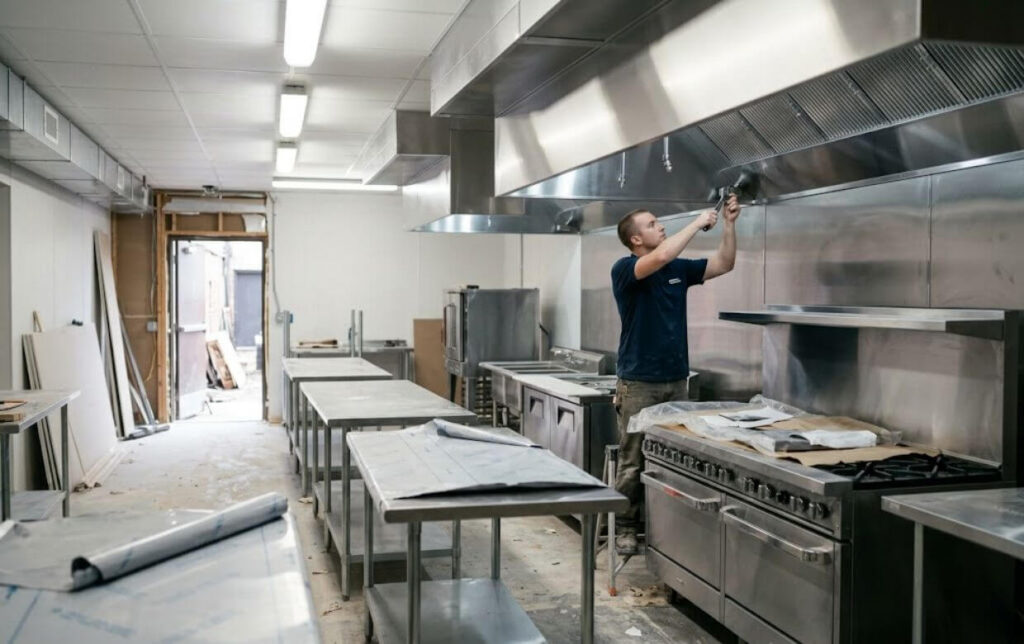
Buildout and equipment tend to get the most attention in expansion planning, but staffing costs are just as real and often start earlier than owners expect. A new location typically needs its kitchen and front-of-house team hired and trained before opening night, which means paying wages during training shifts, sometimes for two to four weeks, with zero matching revenue.
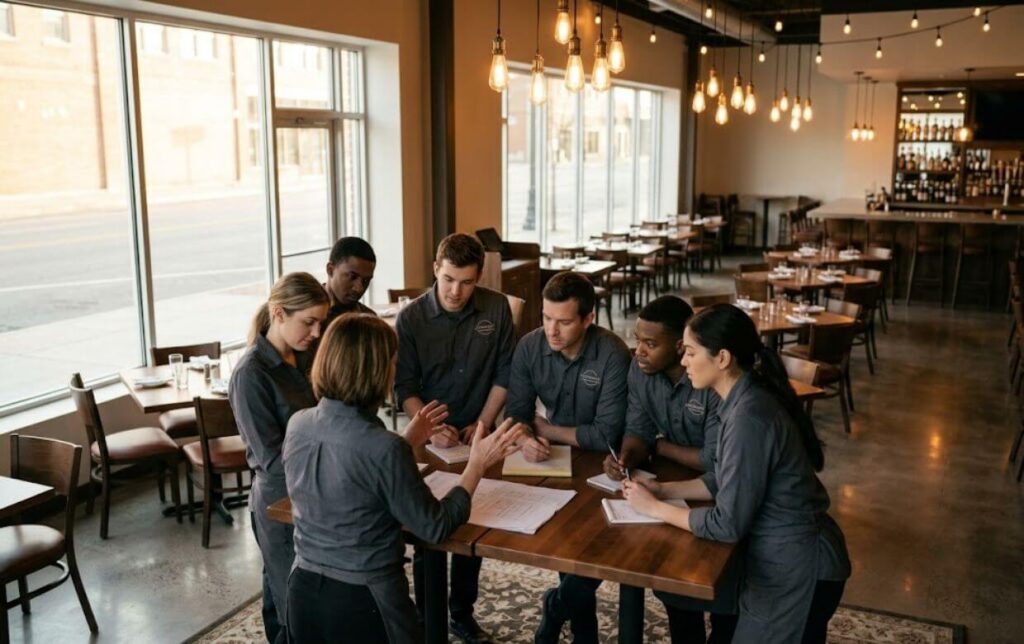
A Tampa gastropub group budgeted $22,000 for pre-opening staffing at its second location, covering training pay for eight new hires over three weeks before the restaurant opened to the public. That cost was folded into the same financing that covered kitchen equipment, so payroll for the new team never competed with payroll at the original location.
Covering payroll gaps during a period with no offsetting revenue is one of the more overlooked parts of expansion, and it’s worth budgeting for explicitly rather than assuming it’ll come out of general cash flow.
Timing a Second Location Around Seasonal Cash Flow
Restaurant revenue rarely moves in a straight line, and expansion timing should account for that. Opening a second location right before a restaurant’s traditionally slow season adds pressure on both ends: the new location is ramping up while the original location’s cash flow is naturally softer. Many operators instead time buildout and hiring to finish just ahead of their strongest season, so the new location opens into demand rather than a lull.
Understanding cash flow solutions for seasonal businesses is useful context here even for restaurants that aren’t dramatically seasonal, since almost every concept has a slower stretch somewhere in the calendar. Revenue-based repayment helps regardless of timing, since payments adjust with sales at whichever location is generating them, but smart timing still reduces how much that flexibility gets tested.
A Second Location Doesn’t Have to Mean Giving Up Equity
Some operators facing a large buildout number start considering outside investors as a way to fund expansion without taking on debt. That path solves the cash problem but creates a different one: a partner with a stake in decisions that used to be yours alone, from menu changes to hiring to how profits get reinvested.
Growing a business without diluting equity is possible when expansion capital comes from financing tied to your restaurant’s revenue rather than from selling a piece of the company. You keep full ownership and full control of both locations; the financing gets repaid as a percentage of sales, and then it’s done; there’s no seat at your table for someone else’s opinion on the menu. It’s also worth thinking ahead to how quickly growth itself can strain cash flow even after a second location is financed and open, since rapid expansion creates its own version of the cash crunch operators are usually trying to avoid.
What Happens After the Second Location Opens
Financing a second location isn’t just about the opening. It’s about making sure the new restaurant can stand on its own within a reasonable window, typically the first six to twelve months, without ongoing support from location one. A few practices help:
- Track the two locations’ financials separately from day one, even if they share ownership and back-office systems, so you can see clearly whether the new location is on its expected trajectory
- Set a specific timeline for when the new location should reach break-even and revisit financing or staffing decisions if it’s falling significantly behind
- Keep a cash reserve at the original location that’s explicitly off-limits for the new location’s expenses, protecting the business that’s carrying the most risk if something goes wrong
- Reassess repayment structure as revenue stabilizes, since revenue-based financing naturally adjusts, but it’s still worth checking in on the overall picture as the new location matures
How working capital helps scale operations is a useful frame for thinking about this stage: the goal isn’t just opening the second door; it’s building an operation that can eventually support a third. Reading how other operators approached similar expansions can also help set realistic expectations for what that first year of running two locations actually looks like.
Comparing Financing Options for Restaurant Expansion
| Financing Type | Best For | Repayment Structure | Typical Speed |
| Revenue-based financing | Full buildout and equipment costs | Percentage of daily/weekly sales | 24–48 hours |
| Business line of credit | Ongoing, unpredictable opening costs | Draw as needed, repay what’s drawn | 24–48 hours to open |
| Equipment leasing | Kitchen equipment specifically | Fixed monthly lease payment | Varies by equipment vendor |
| Traditional bank term loan | Large buildouts with time to spare | Fixed monthly payment | Weeks to months |
Business loans versus lines of credit is worth reading in full if you’re deciding between a lump sum and a flexible credit line, since the right answer often depends on whether your costs are mostly one-time (buildout) or ongoing (unpredictable pre-opening expenses). Equipment leasing is also worth a look specifically for the kitchen buildout, since leasing keeps a large chunk of the equipment cost off your balance sheet as debt.
Why Speed Matters More in Expansion Than in Routine Financing
A slow-moving bank loan is an inconvenience for routine working capital. For a second location, it can be the difference between securing the space you want and losing it to another tenant. Landlords negotiating a commercial lease often expect proof of financial readiness, and contractors building out a kitchen typically want a deposit before they’ll commit a construction crew to your timeline.
According to the U.S. Small Business Administration’s guidance on growing a business, securing financing and having a clear plan in place before signing a new lease reduces the risk that expansion outpaces a business’s financial capacity. Platform Funding’s 24-to-48-hour funding decisions are built around exactly this kind of timeline pressure: the difference between an operator who can move on a good location and one who watches it go to a competitor. Seeing how the application and decision process actually works ahead of time, and understanding what to expect from a fast online business loan more generally, helps operators plan their lease and contractor timelines around a realistic funding window rather than a hopeful one.
The Federal Trade Commission’s guidance on business credit and financing is also a useful resource for any operator comparing financing options, particularly around understanding total repayment cost before signing an agreement.
Platform Funding’s Track Record With Growing Restaurants
Platform Funding has funded more than $2 billion to over 30,000 businesses, maintains a 95% approval rate, and holds an A+ rating with the Better Business Bureau alongside a 4.9 out of 5 Trustpilot rating from 575 verified reviews. For restaurant operators specifically, that track record translates into underwriting that understands food-service cash flow patterns rather than applying generic small-business criteria that don’t fit how restaurants actually make money.
Fast business funding built around revenue rather than rigid credit criteria tends to be a better match for restaurant expansion than products designed for businesses with predictable, flat monthly revenue. Comparing Platform Funding against other alternative lenders is worth doing before committing to any option, since terms and underwriting approaches vary significantly across the alternative lending space. For a broader look at every financing product available to restaurants beyond second-location expansion, Platform Funding’s restaurant funding options overview covers the full range. Operators ready to move forward can start an application directly and get a funding decision within 24 to 48 hours.
Get a funding decision for your second location in 24–48 hours
Most restaurant operators complete the application in under 15 minutes. No collateral required, and a dedicated account manager reviews your application personally.
Frequently Asked Questions
How much does it typically cost to open a second restaurant location?
Costs vary significantly by market and concept, but most full-service second locations run between $250,000 and $600,000 when buildout, kitchen equipment, pre-opening staffing, and lease deposits are all included. Quick-service and smaller-footprint concepts can come in lower, while high-end buildouts in expensive real estate markets can run well beyond that range. Getting itemized bids from contractors and equipment vendors early gives a much more accurate number than industry averages.
Can I get financing for a second location if my first restaurant is still relatively new?
Platform Funding works with restaurants that have been operating for 6 months or more and generate at least $10,000 in monthly revenue, which is a lower bar than many traditional lenders require. A restaurant with a shorter track record can still qualify, though underwriting will weigh the consistency of that shorter history more heavily than it would for a restaurant with several years of data.
Will financing a second location hurt my first location’s finances?
That’s exactly the outcome this kind of financing is meant to prevent. Because the underwriting is based on your existing restaurant’s performance but the funds are advanced against future repayment rather than pulled from your current operating account, your first location’s cash flow stays untouched. The financing is repaid over time as a percentage of sales rather than as an upfront cash outlay from location one.
What’s the difference between revenue-based financing and a traditional bank loan for expansion?
A traditional bank loan comes with a fixed monthly payment regardless of how either location performs that month and typically takes weeks to months to fund. Revenue-based financing repayment is tied to a percentage of sales, so it adjusts automatically if a new location’s ramp-up is slower than projected, and funding decisions typically come back in 24 to 48 hours.
Should I finance the buildout and equipment together or separately?
Many operators find it simpler to finance both under one facility sized to the full project cost since it reduces the number of payment schedules to track. That said, equipment leasing is worth evaluating separately for the kitchen specifically, since leasing structures can offer different tax and balance-sheet treatment than financing equipment as part of a larger lump sum.
How far in advance should I start the financing process before signing a lease?
Ideally 60 to 90 days before you need to sign, which gives time to gather financials, go through underwriting, and have funds ready when a landlord or contractor needs proof of financial readiness. Platform Funding’s 24-to-48-hour decision timeline means the financing itself isn’t usually the bottleneck, but lease negotiations and contractor scheduling often take longer than owners expect.
Do I need a business plan specifically for the second location to qualify?
Platform Funding’s underwriting is based primarily on your existing restaurant’s revenue and operating history rather than requiring a formal business plan for the new location. That said, having a clear cost estimate, target opening date, and revenue projection for the new location is useful for your own planning even if it isn’t a strict underwriting requirement.
Can I use a line of credit instead of a lump sum to fund the second location?
A line of credit works well for the unpredictable costs that come up during any opening, things you can’t fully budget for in advance. Most operators use a larger lump sum, often revenue-based financing, for the predictable big-ticket items like build-out and equipment and hold a line of credit in reserve for the unexpected.
What happens if the second location opens slower than expected?
This is precisely where revenue-based financing’s structure helps. Because repayment is a percentage of sales rather than a fixed amount, a slower-than-expected ramp-up at the new location means smaller payments during that period rather than a fixed obligation that doesn’t care how the location is actually performing.
Is it better to wait until I have cash saved up to self-fund a second location?
Waiting to self-fund avoids taking on financing, but it also means either delaying expansion until enough cash accumulates or diverting your first location’s operating cash flow to fund the opening. Financing that’s underwritten against your existing restaurant’s performance, rather than requiring you to save the full amount first, lets you move on a good location or lease opportunity when it appears rather than waiting years to self-fund.