

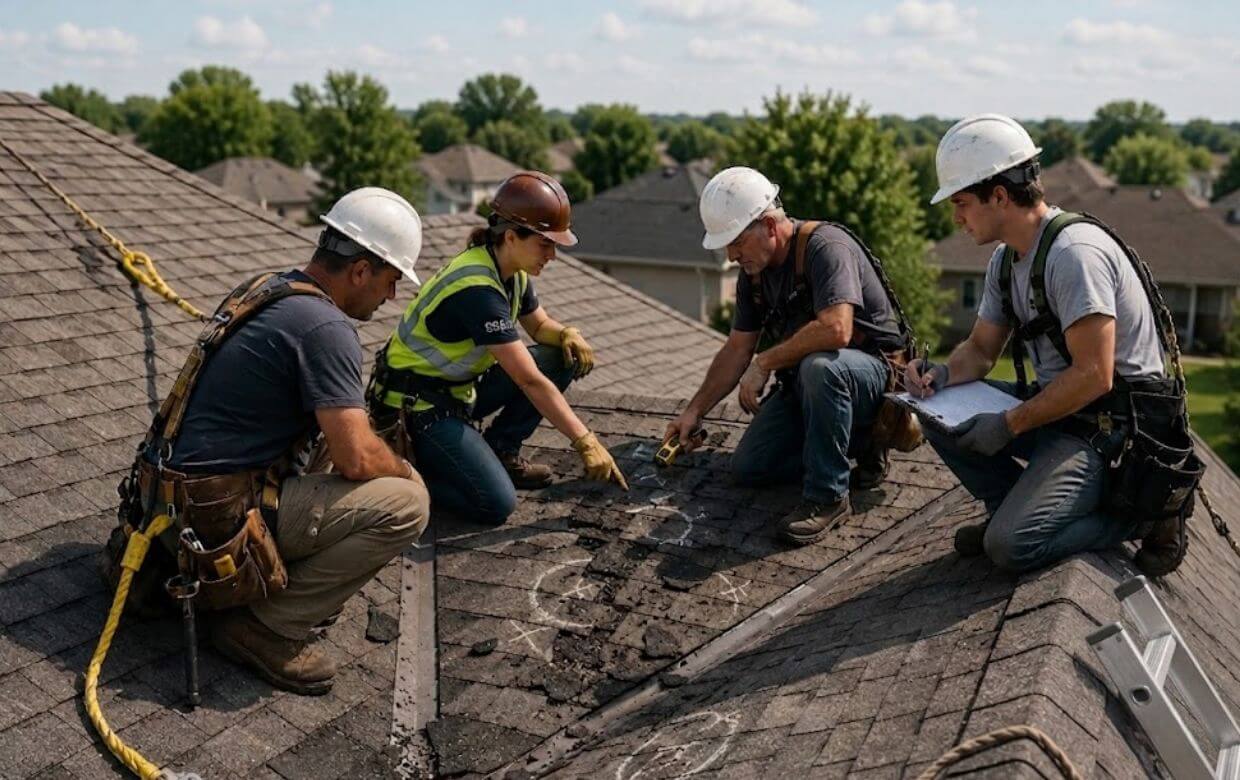
Who this is for: Roofing contractors with $10,000+ in monthly revenue and at least 6 months in business that need $5,000 to $3,000,000 to cover storm season materials, crews, and equipment while insurance proceeds are still pending.
Roofing contractor financing is revenue-based funding that gives roofing businesses fast access to working capital for storm season materials purchases, crew expansion, equipment, and the cash flow gap between when a contractor incurs costs and when insurance proceeds and customer payments actually arrive. Platform Funding provides this financing in amounts from $5,000 to $3,000,000, with funding decisions in 24 to 48 hours, so roofing contractors don’t have to turn down profitable storm work simply because the payment timing doesn’t line up with when costs hit.
Storm season looks like good news for roofing contractors, and in terms of revenue potential it genuinely is. The problem is timing. A single hailstorm can fill a contractor’s schedule with months of restoration work almost overnight, but capturing that work requires spending money now: materials need to be ordered and paid for, crews need to be staffed and paid every week, and equipment needs to be ready. The insurance proceeds that will eventually pay for all of it typically arrive weeks or months after the work is done, and sometimes after a homeowner navigates a mortgage company endorsement process on top of that. That gap between when a roofing contractor spends and when the job actually pays is where cash flow breaks down, not because the business isn’t profitable, but because the timing is working against it.
Why Storm Season Creates a Different Kind of Cash Flow Challenge
Most construction and trade businesses deal with payment timing gaps of some kind, but roofing after a major storm has a specific version of this problem that sets it apart. The demand spike is sudden and compressed. A named storm or a significant hail event doesn’t arrive on a predictable schedule, which means most roofing contractors don’t have reserves specifically sized to respond to one. They have whatever cash position they’d built up from their normal seasonal workflow, and then a storm hits and suddenly the business needs to operate at a significantly higher volume overnight.
At the same time that demand surges, materials costs often rise. Shingle prices, underlayment, and flashing costs can jump after a named storm as regional demand outstrips supply, which means a contractor who doesn’t lock in materials pricing quickly ends up either paying more or losing jobs to competitors who moved faster. Suppliers in high-demand conditions sometimes tighten payment terms or require cash on delivery rather than the net-30 or net-45 terms a contractor might normally operate on, which pulls cash demand forward even further.
The result is a contractor who has more work than they’ve had all year, is spending more per job than they normally would on materials, and is doing all of it well before the insurance checks clear.
How the Insurance Payment Cycle Creates the Gap
On most storm-damage roofing jobs, the homeowner or building owner files an insurance claim, and payment to the contractor is ultimately tied to when those proceeds are released. That process involves the insurer evaluating the damage, issuing an estimate, releasing an initial payment, and sometimes a subsequent supplemental payment once the actual scope of work is documented. For jobs on properties with mortgage liens, there’s often an additional step where the mortgage company has to endorse the insurance check before the homeowner can release payment to the contractor.
Industry finance advisors who work specifically with roofing contractors put the typical gap between when costs are incurred and when insurance proceeds land at several weeks to months, depending on the insurer, the complexity of the claim, and whether supplemental payments are required. Commercial storm work adds retainage and progress billing layers similar to the way commercial plumbing contracts hold back portions of contract value until project closeout. Timing, rather than a lack of profitable work, is consistently identified as the primary reason roofing businesses run into cash flow problems during storm season.
A Real-World Scenario
Consider a roofing contractor in Dallas who operates a steady residential and commercial book of business, averaging around $95,000 in monthly revenue through a normal spring and summer. A significant hail event hits the area in late July, and within two weeks the contractor has commitments on fourteen additional insurance-contingent residential jobs plus one commercial flat roof replacement, representing roughly $340,000 in additional contracted work.
To capture that work, the contractor needed to bring on two additional crews immediately, order materials for the first eight jobs right away to lock in pricing before regional shortages pushed costs higher, and rent additional equipment for the commercial job. All of that happened in the first two weeks after the storm. The first insurance checks from those jobs began arriving six weeks later, with the last ones clearing nearly three months after the storm event.
Rather than turning down jobs or waiting for the insurance proceeds to finance each subsequent job, the contractor applied for revenue-based financing and had $95,000 in the business account within two days of applying. The funds covered materials for the first wave of jobs, payroll for the expanded crews through the first month, and the equipment rental for the commercial job. Repayment was structured as a percentage of the business’s overall revenue, which meant it scaled with the elevated revenue that followed as jobs completed and insurance checks cleared.
What Roofing Contractor Financing Actually Covers
Working capital from revenue-based financing isn’t earmarked for one category; a contractor applies it wherever the business needs it most as storm season ramps up. In practice the needs cluster into a few categories that show up most consistently.
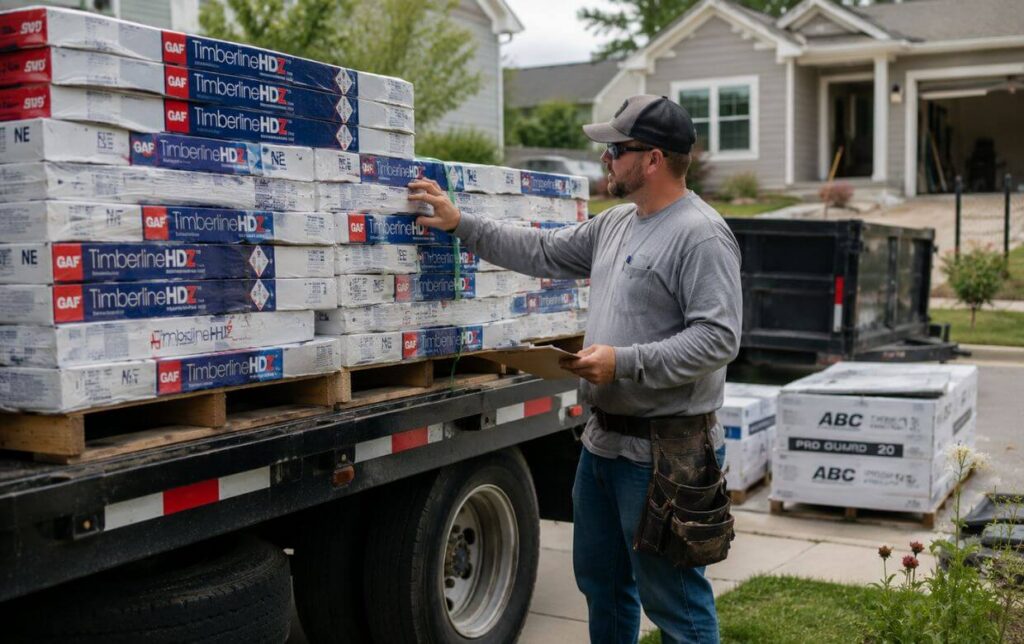
Materials purchases are typically the most urgent, since contractors who move quickly after a storm can lock in pricing before regional demand pushes costs higher and before supplier inventories tighten. Crew costs follow closely, since expanding to handle a sudden surge in job volume means bringing on additional labor immediately, well before those jobs generate revenue. Equipment expenses round out the list for many contractors, covering dumpster rentals, lifts, and temporary protection materials that each job requires before any payment has come in. For contractors taking on commercial storm work alongside residential jobs, materials deposits and mobilization costs can each represent tens of thousands of dollars due before any progress billing is submitted.
How Qualification Works for Roofing Contractors
Platform Funding’s qualification standards are built for businesses with an established operating history. To qualify, a roofing business generally needs at least 6 months in operation and $10,000 or more in average monthly revenue. Underwriting reviews business and personal credit history along with recent bank statements, moving faster than a traditional bank loan application.
Platform Funding doesn’t promise approval to every applicant. The 95 percent approval rate among qualifying applicants reflects a real underwriting process, not a formality, but it’s meaningfully higher than the roughly 27 percent approval rate traditional banks extend to small businesses for loans. For a roofing contractor who needs to respond to a storm opportunity within days rather than weeks, the difference in speed between a funding decision in 24 to 48 hours and a bank underwriting process that takes weeks can be the difference between capturing the available work or watching it go to a competitor with faster access to capital.
Storm Season Is Here
Get Your Storm Season Capital in 24–48 Hours
Most roofing contractors complete their application in under 15 minutes. No collateral required. Your dedicated account manager reviews your application personally.
Start Your Application →Revenue-Based Financing Versus a Business Line of Credit for Storm Season
Some roofing contractors already have access to a business line of credit, and it’s worth using when it’s available and has room on it. The challenge for storm season specifically is that a line of credit is typically sized around a contractor’s normal operating volume, not around the working capital needed to respond to a sudden doubling or tripling of job volume after a major storm event. A contractor who has drawn their line down through the slower spring or one that is carrying a balance from equipment purchases might find the available balance simply isn’t enough to cover a full storm-season materials and crew ramp.
Revenue-based financing doesn’t require the credit line to have capacity, and it doesn’t reduce available credit for other purposes. It’s underwritten against the business’s overall revenue history, which means a contractor can access it independently from whatever other financing arrangements are already in place. The two tools tend to work better together than as direct substitutes, since a contractor with both available is better positioned to respond to storm volume than one relying on either alone.
How Repayment Works When Revenue Is Storm-Driven and Lumpy
Roofing revenue after a storm event doesn’t arrive smoothly. A contractor might complete and collect on several jobs in quick succession, then have a two-week stretch where insurance holds slow and payments back up. A fixed monthly loan payment doesn’t account for that pattern; it assumes steady income that storm-recovery revenue rarely looks like.
Because revenue-based repayment is calculated as a percentage of actual revenue rather than a fixed monthly amount, the payment scales with what the business is actually collecting at any given time. Weeks when insurance checks clear quickly and job completions stack up generate higher repayment. Weeks when claims are slow and a few jobs are waiting on mortgage company sign-off generate lower repayment. That structure tends to match a roofing contractor’s real cash flow pattern considerably more accurately than a fixed-payment product that was sized around an assumption of steady monthly income.
The Mortgage Endorsement Problem Most Roofing Contractors Know Too Well
There’s a specific wrinkle in residential storm roofing that doesn’t exist in most other contractor trades and that deserves its own explanation: the mortgage company endorsement requirement. When a homeowner files a storm damage claim and has an outstanding mortgage, the insurance company typically names both the homeowner and the mortgage lender as joint payees on the check. Before the homeowner can endorse that check over to a roofing contractor, the mortgage company has to sign off on it, which often requires submitting documentation of the scope of work, a copy of the contractor’s license, and sometimes an inspection or draw process before the lender will endorse the funds.
That process varies considerably from one mortgage servicer to another. Some handle it within a week. Others require multiple rounds of documentation and take four to six weeks or longer. For a contractor who has already completed the job and is waiting on final payment, the mortgage endorsement step can add weeks to the gap with no predictable timeline. Larger insurance jobs on higher-value properties with bigger mortgages tend to involve more scrutiny, not less, since the mortgage lender has more at stake in ensuring the repair is done correctly.
This is a dimension of storm-season cash flow that has no equivalent in commercial electrical, plumbing, or HVAC work, and it’s part of why roofing contractors specifically tend to carry longer accounts receivable cycles than most other trades. Revenue-based financing’s repayment flexibility around actual collections rather than projected timelines is particularly relevant here, since a contractor can’t reliably predict how long any given mortgage endorsement process will take.
How Slow Seasons Affect a Contractor’s Ability to Respond to Storm Events
Roofing has a genuine off-season in most markets, and that slow period matters for how well-positioned a contractor is when a storm hits. In northern markets, winter can cut job volume significantly for three to four months. Even in warmer climates, post-storm work tends to cluster in late spring and summer, leaving fall and winter as slower stretches for most residential roofing businesses.
The challenge is that the fixed costs of running a roofing business don’t pause during slow seasons. Crew payroll for retained workers, insurance, equipment payments, and vehicle costs all continue, which gradually draws down whatever cash reserves the business built up during a busy stretch. A contractor coming out of a slow winter into the beginning of storm season may have a leaner cash position than they would ideally want heading into a period when they might need to respond to a major weather event.
Industry finance advisors recommend roofing contractors aim to maintain cash reserves covering two to three months of fixed expenses specifically to handle these cycles. But when a slow season runs longer than expected, or when an unexpected equipment repair or other expense hits during the off-season, those reserves don’t always build up the way the plan assumed. Having financing access established before the season starts means a contractor doesn’t have to choose between capturing the available storm work and waiting until they’ve rebuilt their cash position.
What Separates Storm Opportunity Capital From Emergency Financing
It’s worth being clear about the distinction. A roofing contractor who has too much work, a full pipeline of profitable insurance jobs, and simply needs to bridge a profitable timing gap is in a fundamentally different situation from a contractor who is struggling with slow revenue and using financing to cover operating losses. The first is a timing problem with a clear resolution as jobs complete and insurance proceeds clear. The second is a structural problem that financing won’t fix.
Roofing contractors considering this option should be honest with themselves about which situation they’re in. The storm scenario described in this article, where the work is contracted, the jobs are profitable, and the gap is purely about when the money arrives versus when costs hit, is exactly the kind of use case revenue-based financing is suited for. Using short-term, higher-cost capital to bridge a profitable timing gap is a very different decision from using it to cover a business that isn’t generating enough revenue to sustain itself, and the U.S. Small Business Administration’s guidance on cash flow management points to this same distinction as the starting point for any financing evaluation.
Planning Storm Capacity Before the Season, Not During It
Roofing contractors who’ve been through a few significant storm events tend to recognize a consistent pattern: the contractors who capture the most work after a storm are usually the ones who had financing access lined up before the season started, not the ones scrambling to arrange it after a storm has already hit and job commitments are already piling up. Setting up that access during a normal-volume stretch, when the business’s cash position is stronger and the urgency isn’t there yet, puts a contractor in a fundamentally better position to respond when a storm event does arrive.
The U.S. Small Business Administration’s guidance on cash flow management makes the same broader point about timing: building access to capital when the business is stable is consistently more effective than trying to arrange it under pressure when a specific need has already materialized. The Federal Trade Commission also publishes guidance on evaluating business lenders, which is worth reviewing when comparing options for the first time, particularly for contractors who haven’t previously used alternative financing alongside a bank relationship.
Platform Funding has funded more than $2 billion to over 30,000 businesses, holds an A+ rating with the Better Business Bureau, and maintains a 4.9 out of 5 rating on Trustpilot based on 575 verified reviews.
Frequently Asked Questions
Common questions about roofing contractor financing are below; see the complete FAQ library for broader financing questions.
What is roofing contractor financing?
Roofing contractor financing is revenue-based funding that gives roofing businesses fast access to working capital for storm season materials purchases, crew expansion, equipment, and the cash flow gap between when a contractor incurs costs and when insurance proceeds and customer payments arrive. It is not tied to a specific job or insurance claim; it is capital tied to the contractor’s overall business revenue, which makes it usable across whatever combination of storm-season needs comes up at once.
Why is the cash flow gap so significant for roofing after a storm?
Storm-damage roofing jobs are typically paid through insurance claims, which means the contractor incurs materials, labor, and equipment costs immediately but waits weeks to months for insurance proceeds to be released to the homeowner and then paid to the contractor. On properties with mortgage liens, an additional endorsement step by the mortgage company can extend the gap further. This structure means contractors are effectively financing the project out of pocket for weeks or months, regardless of how profitable the job ultimately is.
How much can a roofing contractor borrow?
Platform Funding offers revenue-based financing from $5,000 to $3,000,000. The specific amount a contractor qualifies for depends on monthly revenue, time in business, and overall financial history, evaluated during the application process.
What are the qualification requirements?
Generally, a roofing business needs at least 6 months in operation and $10,000 or more in average monthly revenue to qualify. Underwriting also reviews business and personal credit and recent bank statements, though the process moves faster than traditional bank underwriting.
How quickly can a roofing contractor get funded?
Platform Funding targets a funding decision within 24 to 48 hours of a completed application. Contractors responding to a storm event who need to order materials or bring on crews immediately are typically able to go from application to funded within that window.
Can this financing cover both residential insurance jobs and commercial storm work at the same time?
Yes. Because the financing is tied to the contractor’s overall business revenue rather than a single job or claim, it can be applied across whatever mix of residential and commercial storm work the business is managing simultaneously, including materials deposits on multiple jobs within the same funding round.
What happens if insurance payments are delayed longer than expected?
Repayment is structured as a percentage of the business’s overall revenue, so it adjusts based on what the business is actually collecting rather than assuming any single job’s payment timeline. If insurance proceeds are delayed on several jobs simultaneously, the repayment naturally scales down during that period rather than remaining fixed at a level sized around faster payment assumptions.
Is this only useful during active storm season, or can it be used during slower periods too?
While this article focuses on storm-season demand spikes, the same revenue-based financing product is available year-round for any working capital need that meets the qualification requirements, including off-season equipment purchases, crew retention during slow periods, or materials deposits on large commercial jobs outside of storm season.
Does using this financing affect a contractor’s ability to use a bank line of credit?
Revenue-based financing through Platform Funding is a separate, unsecured product and doesn’t require drawing down or modifying an existing bank line of credit. Most contractors use it alongside an existing bank relationship rather than in place of one.
How does Platform Funding compare to other lenders for roofing contractors?
Platform Funding offers a 95 percent approval rate among qualifying applicants, funding amounts up to $3,000,000, an A+ Better Business Bureau rating, a 4.9 out of 5 Trustpilot rating from 575 verified reviews, and a dedicated account manager from application through repayment, supported by more than $2 billion funded to over 30,000 businesses.