


Introduction: Why Spring Equipment Decisions Shape the Entire Year
Restaurant equipment problems rarely show up at convenient times. They surface during busy services, peak weekends, or right before seasonal demand spikes. Spring is when those risks become impossible to ignore.
Summer is approaching fast. Patios reopen. Tourism increases. Catering, events, and extended service hours return. Yet many kitchens are still running on refrigeration, ranges, or dishwashers that are well past their ideal operating life. With average restaurant net margins sitting near 3 percent, large cash purchases are rarely realistic.
This is where restaurant equipment financing becomes a strategic decision rather than a reaction to failure. Spring provides a narrow but powerful window to upgrade equipment, train staff, and stabilize operations before the busiest months of the year.
How to Finance Restaurant Equipment in Spring 2026
Restaurant equipment financing allows restaurant owners to fund $5,000 to $500,000 in commercial kitchen upgrades with fast decisions and repayment tied to sales. Options include revenue-based financing, equipment loans, and leasing. Equipment placed into service by December 31, 2026 may qualify for the Section 179 deduction of up to $2.56 million, reducing tax liability by 21–37 percent. Spring timing allows installation before summer peak season, staff training during slower months, and avoidance of emergency replacement costs.
The Spring Equipment Window: Why Timing Matters
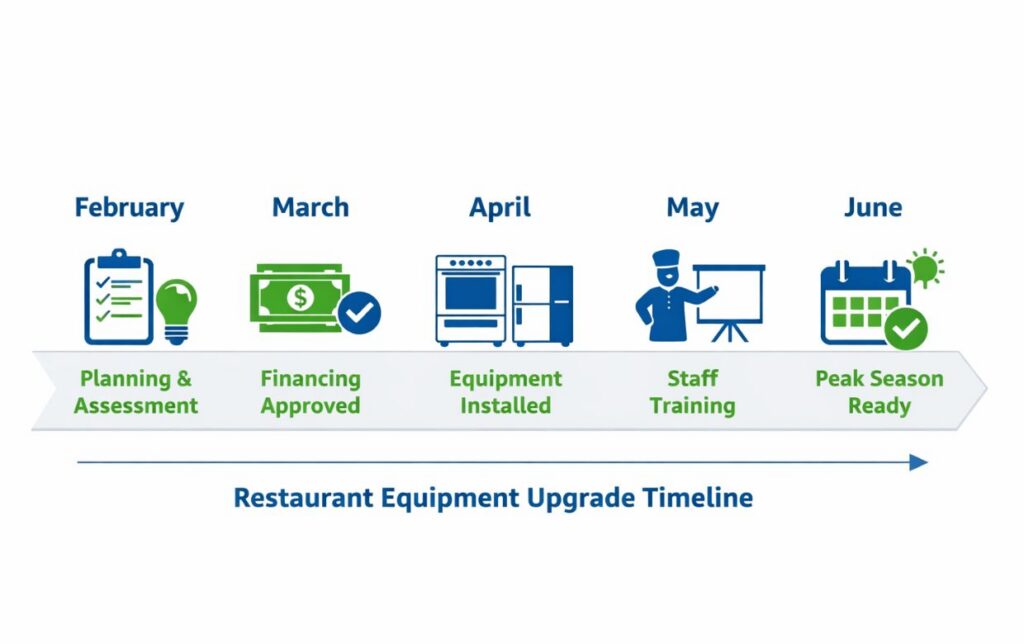
Spring creates the best balance between operational flexibility and financial control.
February to March
Restaurants review equipment age, identify failure risks, and secure funding before demand accelerates.
April
Equipment is ordered and installed during slower service periods, minimizing disruption.
May
Staff training, workflow adjustments, and testing happen before volume increases.
June through August
Kitchens operate at full capacity during peak season without installation delays or breakdowns.
Waiting until June often forces installations into the busiest weeks of the year, increasing labor strain, service disruption, and lost revenue.
Five Reasons Spring 2026 Is the Best Time for Restaurant Equipment Upgrades
1. Prepare Before Summer Revenue Peaks
For most restaurants, summer drives the highest service volume of the year. Outdoor dining, travel, events, and longer daylight hours increase covers and ticket sizes. Equipment must be fully operational during this period.
Spring installation ensures:
- No interruptions during high-volume service
- No rushed training during dinner rushes
- No learning curves when margins matter most
2. Section 179 Turns Equipment Into a Tax Strategy
Section 179 allows restaurants to deduct up to $2.56 million in qualifying equipment in 2026, as long as purchases are placed into service by December 31.
Eligible assets include:
- Cooking equipment and ovens
- Refrigeration and walk-in coolers
- Dishwashers and sanitation systems
- HVAC units and kitchen hoods
- Dining room furniture and fixtures
Example
- Equipment investment: $85,000
- Tax bracket: 30 percent
- Tax savings: $25,500
- Effective after-tax cost: $59,500
Financing does not eliminate eligibility. In many cases, interest expense is also deductible, further reducing the real cost of upgrades.
3. Planned Replacements Avoid Emergency Premiums
Emergency replacements often cost 40–60 percent more than planned upgrades. Rush delivery fees, overtime installation labor, spoiled inventory, and lost service days add up quickly.
Spring planning allows restaurants to:
- Compare multiple vendors
- Negotiate pricing
- Schedule weekday installations
- Avoid emergency downtime
Restaurants that wait until equipment fails during summer typically pay more and lose revenue at the same time.
4. Energy-Efficient Equipment Reduces Monthly Overhead
Modern Energy Star rated equipment uses significantly less gas, electricity, and water than units installed a decade ago.
Common savings include:
- 20–40 percent lower refrigeration energy use
- 25–35 percent lower dishwasher water consumption
- Improved HVAC efficiency during peak months
Many operators reduce utility costs by $500 to $1,200 per month after upgrading core systems, helping offset financing costs while improving kitchen comfort and consistency.
5. Staff Training Happens Before the Rush
Spring installation gives staff time to learn new equipment without pressure. Teams can adjust recipes, fine-tune timing, and build confidence before volume increases.
This preparation reduces service errors, improves consistency, and lowers stress once summer demand hits.
What Restaurant Equipment Can Be Financed
Commercial kitchen equipment loans often cover full upgrade packages, allowing restaurants to modernize systems without piecemeal purchases.
Cooking Equipment
Gas ranges, ovens, combi ovens, fryers, and griddles typically fall between $15,000 and $80,000 and often last 10–20 years.
Refrigeration and Cold Storage
Walk-in coolers, freezers, reach-in refrigeration, and prep tables usually range from $10,000 to $60,000. Failure can destroy thousands of dollars in inventory.
Dishwashing and Sanitation
Door-type and conveyor dishwashers, pot washers, and pre-rinse systems typically range from $8,000 to $25,000 and often reduce labor hours.
HVAC and Ventilation
Kitchen hoods, make-up air systems, and dining HVAC units often range from $15,000 to $50,000. Non-functional systems can shut down service entirely.
Dining Room and Service Equipment
POS hardware, tables, chairs, booths, and bar equipment may also qualify for Section 179 depending on use.
Equipment Financing vs Leasing: A Practical Decision Framework
The question of hospitality equipment leasing vs buying depends on lifespan, maintenance burden, and tax treatment.
Equipment Financing (Ownership)
Financing works best for long-life assets.
Advantages
- Section 179 tax deduction
- Ownership and balance-sheet value
- Lower long-term cost
Considerations
- Maintenance responsibility
- Higher payments early on
Best suited for walk-in coolers, ranges, ovens, HVAC systems, and major refrigeration.
Equipment Leasing
Leasing works better for shorter-life or technology-driven equipment.
Advantages
- Lower monthly payments
- Maintenance often included
- Easier upgrades
Considerations
- No Section 179 benefit
- No ownership
Many operators use a blended strategy, financing durable kitchen assets while leasing POS systems or ice machines. Platform Funding structures both options through its restaurant financing solutions.
Why Revenue-Based Financing Fits Restaurant Cash Flow
Restaurant revenue is rarely consistent. Winter slows down. Summer surges.
Revenue-based financing for restaurants adjusts payments automatically based on actual sales rather than fixed monthly amounts. Payments rise during busy months and ease during slower periods, protecting thin margins and reducing pressure during low-revenue stretches. This structure aligns naturally with seasonal operations and avoids the strain that fixed payments create during off-peak periods. Many seasonal operators reinforce this approach with seasonal business financing strategies that help stabilize cash flow throughout the year.
Real Outcomes with Platform Funding
Restaurants using restaurant equipment loans through Platform Funding consistently report:
- Decisions within 24–48 hours
- Equipment installed before peak season
- Tax savings that offset financing costs
- Improved service speed and kitchen efficiency
Avoiding downtime is critical, as equipment failures during peak service can erode revenue faster than many owners anticipate, especially when equipment downtime can impact cash flow more than expected.
Frequently Asked Questions
What is restaurant equipment financing?
Restaurant equipment financing provides capital to purchase or upgrade commercial kitchen equipment, often in the $5,000 to $500,000 range. Many restaurants use it to replace aging equipment before peak season without draining operating cash.
What equipment qualifies for commercial kitchen equipment loans?
Most financing programs cover core kitchen assets such as ranges, ovens, fryers, refrigeration, walk-in coolers, dishwashers, prep equipment, and ventilation systems. Many lenders also allow dining furniture and POS hardware when included in a broader upgrade.
Does restaurant equipment financing qualify for the Section 179 deduction in 2026?
In many cases, yes. If the equipment is eligible and placed into service by December 31, 2026, it may qualify for Section 179 deductions up to $2.56 million. Confirm eligibility with a qualified tax professional.
Is hospitality equipment leasing vs buying better for restaurants?
It depends on the equipment lifecycle and your tax strategy. Buying or financing often fits long-life assets like walk-ins, ranges, ovens, and HVAC. Leasing can make sense for shorter-life or tech-driven items such as POS hardware or certain ice machines.
How fast can I get funding for kitchen upgrade financing?
Timing varies by provider. Many restaurant owners choose fast restaurant business loans or revenue-based financing when speed matters, especially for spring renovations that need completion before summer demand increases.
How do revenue-based payments work for restaurants?
Revenue-based financing uses a percentage of sales, so payments rise during busy months and ease during slower periods. This structure can reduce pressure compared with fixed monthly payments when revenue fluctuates seasonally.
Can I use restaurant renovation financing 2026 for both equipment and updates?
Often, yes. Many restaurants combine equipment upgrades with related improvements such as ventilation, refrigeration layout changes, and dining updates. The best fit depends on the scope, timeline, and how funds will be used.
Disclaimer: This content is for informational purposes only and is not tax or legal advice. Consult a qualified professional about Section 179 and your specific situation.
Get Your Restaurant Ready for Summer with Smart Equipment Financing
Spring equipment upgrades influence the entire year. Reliable kitchens reduce stress, prevent breakdowns, and keep service consistent during peak demand.
With restaurant equipment financing through Platform Funding, restaurant owners receive fast decisions, flexible repayment tied to sales, and support designed around real restaurant seasonality.
Contact Platform Funding today to secure restaurant equipment financing and prepare your kitchen for the 2026 peak season.