


Written by
Chief Production Officer, Platform Funding
Brett Sanders has spent over 20 years in the financial industry across private wealth management, mortgage-backed securities, and alternative lending. He has been with Platform Funding for 15 years, where he structures deals and secures approvals for business owners seeking working capital. Brett studied Finance and Communications at Ohio State University.
Brett is not a tax professional. The guidance below is general information, not tax advice for any specific business.
You found the machine, the dealer says it can be delivered, and someone told you the whole purchase is deductible this year. Then your accountant asks when it will actually be running on a job, and the answer turns out to matter more than the purchase date.
Section 179 of the tax code lets a business deduct the full purchase price of qualifying equipment in the year that equipment is placed in service, instead of depreciating it over several years. For tax years beginning in 2026, the maximum Section 179 expense deduction is $2,560,000, reduced dollar for dollar once total qualifying purchases exceed $4,090,000. Platform Funding provides equipment leasing and business loans between $5,000 and $3,000,000, with funding decisions in 24 to 48 hours and a 95% approval rate, so established operators can place equipment in service before the December 31 cutoff.
Those figures come out of IRS Revenue Procedure 2025-32, which sets the inflation-adjusted amounts for 2026. They are not the 2025 numbers, and they are not the numbers printed on most dealer flyers still floating around from last spring. That gap is the first thing worth checking.
WHO THIS IS FOR
Established contractors, fleet operators, and manufacturers with at least 6 months in business and $10,000 or more in monthly revenue who need $5,000 to $3,000,000 to get equipment delivered, operational, and placed in service before December 31.
What Is Section 179 and How Does It Actually Work
Section 179 is an election, not an automatic benefit. You claim it on Form 4562 when you file, and you choose how much of the asset’s cost to expense. Normally, equipment gets depreciated across a recovery period set by the IRS, five years for most construction and transportation assets and seven for a lot of manufacturing gear. Section 179 collapses that schedule into a single year.
The practical effect is cash timing. A $180,000 wheel loader depreciated conventionally returns the tax benefit in slices over half a decade. Expensed under Section 179, the deduction lands on this year’s return, which lowers this year’s taxable income and this year’s estimated payments. For an operator whose cash is tied up in receivables and payroll, pulling that benefit forward is the entire point.
The IRS explains the mechanics in Publication 946, which is the authoritative reference for depreciation and the Section 179 election.
Verify the 2026 Dollar Limits Before You Sign Anything
Three numbers govern 2026, and all three adjust for inflation each year.
The deduction cap is $2,560,000. The phase-out threshold is $4,090,000, meaning once your total qualifying purchases placed in service during the year pass that figure, the cap drops dollar for dollar. Buy $4,500,000 of equipment, and the cap falls by $410,000. The sport utility vehicle sublimit is $32,000.
Most established operators never approach the cap. Where the limits bite is on the business income side, which gets its own section below.
The Placed-in-Service Rule Is the One That Trips People Up
Here is the rule that costs businesses the deduction every December. Section 179 applies to property placed in service during the tax year, not property purchased, ordered, financed, or paid for during the tax year.
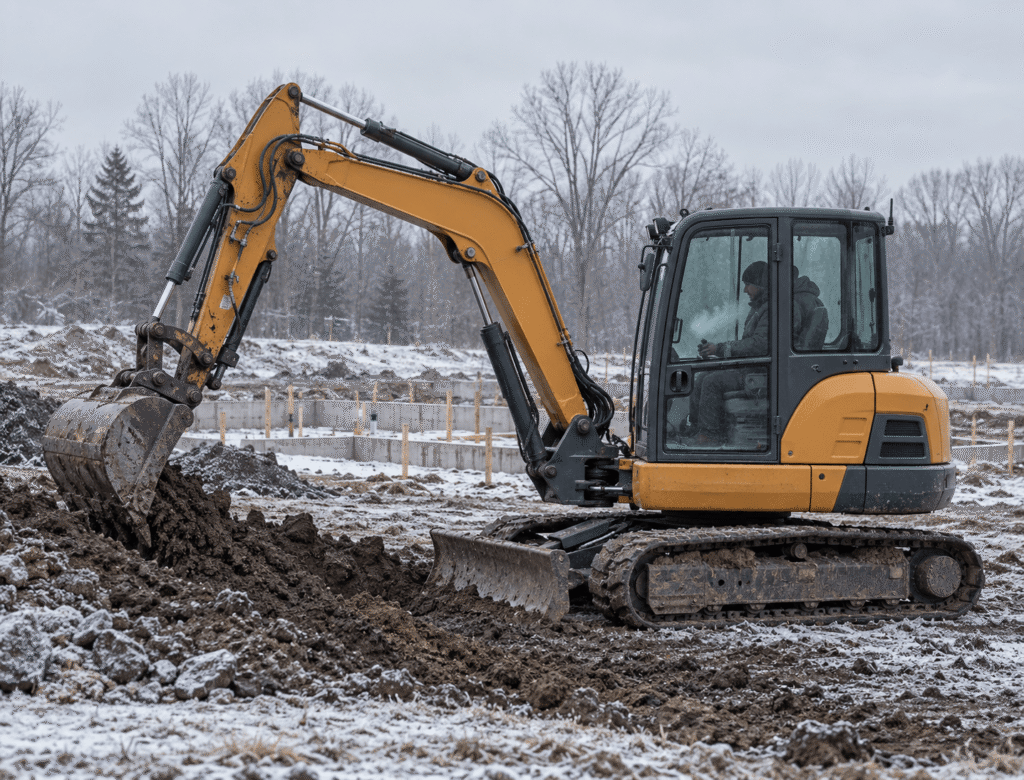
Placed in service means the asset is ready and available for its intended use in your business. A paver that arrives on December 28 and sits on the trailer because nobody has run it is a harder argument than a paver delivered December 20 and used on a job December 22. An excavator bought in November but stuck at the dealer waiting on a hydraulic attachment is not in service until it is operational and available.
Documentation decides this. Delivery receipts with dates, the first job the machine ran, hour meter readings, insurance effective dates, registration dates for titled vehicles, and the date you took possession of the keys. Build that file in December, not in April when your accountant asks for it.
If a December delivery window is tight, the honest answer is sometimes to place the asset in service in January and claim it on next year’s return rather than stretch a weak position. Operators who need the asset working now and want the deduction this year are the ones who benefit from fast capital, which is why equipment financing timelines matter in the fourth quarter in a way they do not in June.
Working backward from a December delivery date? A funding decision in 24 to 48 hours is what keeps the placed-in-service window open.
Check Your Equipment Funding Amount →Which Equipment Qualifies for Section 179
Qualifying property is tangible personal property used more than 50% for business. For the operators reading this, that covers the bulk of what you buy.
Heavy machinery qualifies, which takes in excavators, skid steers, forklifts, and the rest of the construction equipment category. Production machinery for manufacturers qualifies. Transportation assets including dump trucks qualify, subject to the vehicle rules below. Off-the-shelf software qualifies. Office furniture, computers, and shop tools qualify. The full range sits across our financing products and the industries we fund.
Land does not qualify. Buildings generally do not, though certain improvements to the interior of nonresidential buildings can. Property used 50% or less for business does not qualify for the Section 179 election, and property acquired from a related party does not qualify.
Used equipment qualifies. That surprises people. The asset has to be new to you, not new off the line, which opens up the auction and dealer-used market for operators watching price.
Section 179 Vehicles: Where the Rules Get Specific
Vehicle treatment is the most misunderstood corner of Section 179 and the place where bad advice circulates hardest.
Passenger vehicles are subject to luxury auto depreciation caps that limit the first-year write-off well below the purchase price. Sport utility vehicles rated between 6,000 and 14,000 pounds gross vehicle weight sit in a middle tier with that $32,000 sublimit for 2026. Vehicles rated above 14,000 pounds GVWR fall outside the SUV sublimit entirely.
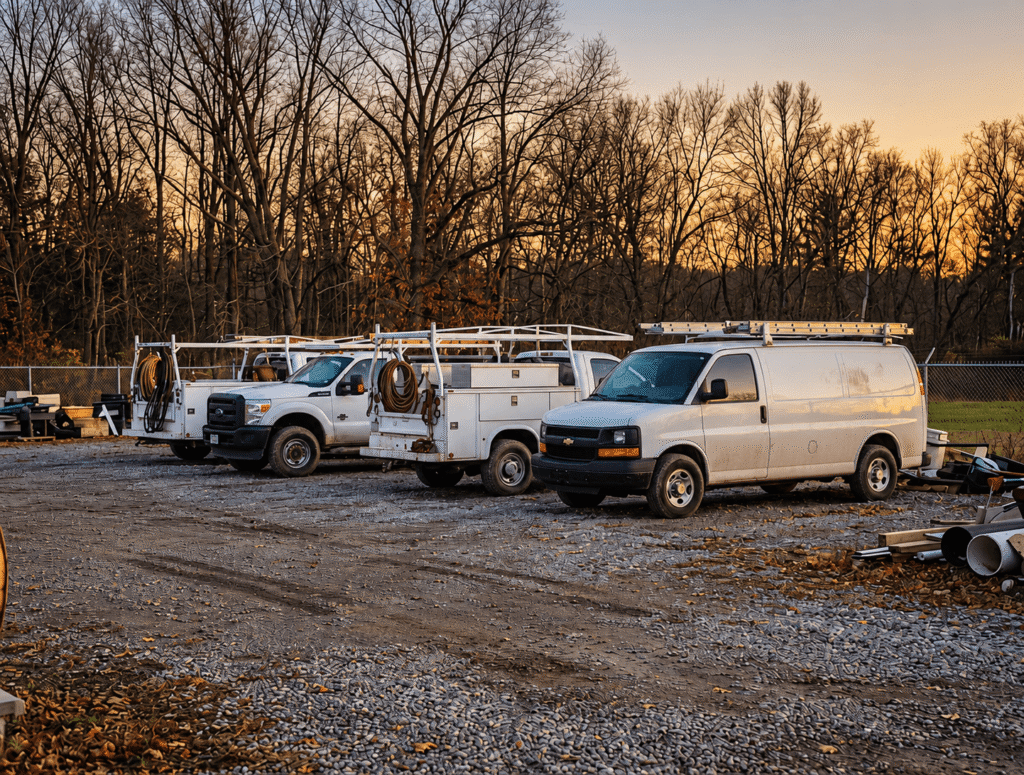
Certain work vehicles also sit outside the SUV cap regardless of weight, based on their physical configuration rather than their badge. The characteristics that matter include having no seating behind the driver’s seat, having a cargo area of at least six feet that is not readily accessible from the passenger compartment, or having a fully enclosed driver compartment with no body section protruding more than thirty inches ahead of the leading edge of the windshield. A properly configured cargo van or a dedicated work truck can qualify where a similarly priced SUV cannot.
Business use percentage governs everything here. A truck used 70% for the business yields a deduction on 70% of the cost. Below 50% business use, the Section 179 election is off the table. Mileage logs are the evidence, and reconstructing them in April is both painful and weak. Fleet operators running mixed-use vehicles should read the detail in Publication 946 on listed property before assuming a full write-off, and operators sizing a broader fleet move can work through the structure in our breakdown of lease versus loan decisions for transportation fleets.
Financed Equipment Still Qualifies for the Full Deduction
This is the part most operators underuse.
Section 179 is tied to the cost of the asset placed in service, not to how much cash you handed over. Finance a $200,000 machine with little down, place it in service in December, and the deduction is calculated on the full qualifying cost even though your actual outlay this year was a fraction of that. You deduct the asset, then pay for it across the term.
That changes the year-end math considerably. An operator with a deduction need but no cash reserve is not stuck. Equipment leasing and equipment loans both get the asset onto the yard inside the window. Structure matters though, and this is a question for your accountant rather than your dealer. A capital lease or a dollar-buyout lease is generally treated as a purchase for tax purposes and supports the Section 179 election. A true operating lease is not a purchase, and the payments are deducted as rent instead. Both can be the right call, but they are not interchangeable at tax time.
If you are working through that comparison, our guides on deciding between leasing and buying and choosing between an equipment lease and a business loan lay out the trade-offs without the tax layer, so you can bring a clear structure question to your CPA.
95%
Approval rate for established businesses
24-48h
Typical time from application to capital
$2B+
Total capital funded to businesses
30,000+
Businesses funded nationwide
The Business Income Limitation Nobody Mentions Until April
Section 179 cannot create or increase a net operating loss. Your total deduction is capped at your aggregate taxable income from the active conduct of your trades or businesses for the year.
Say your business shows $140,000 of taxable income and you place $300,000 of equipment in service. Your Section 179 deduction for the year is limited to $140,000. The remaining $160,000 does not vanish. It carries forward to future years, subject to the same limitation in each of those years.
This is where year-end planning actually lives. If you are buying equipment specifically to reduce this year’s tax bill, you need a realistic read on this year’s taxable income before you commit. Buying $400,000 of machinery to shelter $90,000 of income delivers far less than the dealer’s math suggested.
Bonus depreciation behaves differently, and the rules here changed recently enough that stale advice is still in circulation. Two differences matter most. Bonus depreciation carries no business income limitation, and it can create a loss, which Section 179 cannot. The third thing to know is which schedule your asset falls under. The step-down schedule that was walking the special depreciation allowance toward zero still governs qualified property acquired before January 20, 2025. Property acquired on or after that date sits outside that step-down and is eligible for the full first-year allowance. Most businesses apply Section 179 first and bonus depreciation to whatever basis remains, but the ordering is a conversation for your CPA, not a decision to make off a blog post. Confirm the current-year treatment in Publication 946 before you plan around it.
A Year-End Scenario Worth Walking Through
The following is a composite illustration built to show the sequence, not a verified customer case.
A Columbus, Ohio, excavating contractor projects roughly $310,000 in taxable business income for 2026. He has been running a worn-out 2017 wheel loader that is burning repair hours and costing him on bids. In mid-November he prices a replacement at $218,000 with a four- to six-week lead time, and he does not want to pull $218,000 out of working capital heading into a slow Ohio winter.
He applies for equipment financing on a Tuesday and has a funding decision inside 48 hours. The dealer confirms a December 9 delivery. The machine arrives December 9, is insured effective that date, and runs its first job December 11. He keeps the delivery receipt, the insurance binder, the hour meter photo from day one, and the job ticket.
Because his projected taxable income of roughly $310,000 exceeds the $218,000 cost, the business income limitation does not bind. His CPA elects Section 179 on the full qualifying cost. His cash position stays intact through winter because the machine is financed rather than bought outright, and the deduction lands on the 2026 return rather than being spread across the back half of the decade.
Change one variable and the answer changes. Had the loader arrived December 29 and sat on the trailer until January, the placed-in-service date moves to 2027, and so does the deduction.
Applications Are Open
Most operators finish the application in under 15 minutes. No collateral beyond the financed asset. $5,000 to $3,000,000 for established businesses.
Start Your Application → See How Equipment Leasing WorksWho Qualifies for Equipment Financing to Hit the Deadline
Platform Funding works with established operators rather than brand new businesses. The baseline is at least 6 months of operating history and $10,000 or more in monthly revenue. No collateral is required beyond the financed asset itself, and funding runs from $5,000 to $3,000,000.
Credit is reviewed, but it is one input rather than the gate. Underwriting weighs revenue consistency, time in business, and bank deposit patterns, which is why the approval rate sits at 95% against roughly 27% for conventional small business bank lending. Operators who have been declined elsewhere on credit score alone are often workable here, and we cover that in detail in our piece on getting capital with limited credit.
Industry coverage is broad. Construction, transportation, and manufacturing are core verticals, and operators needing capital beyond the machine itself can look at lines of credit or revenue-based financing depending on how the repayment should sit against seasonal revenue.
How to Apply Before the December 31 Cutoff
Work backward from the placed-in-service date rather than forward from today. Ask the dealer for a firm delivery commitment first, then add a buffer for weather, transport, and any attachment or upfit work that has to happen before the asset is operational. That end date is your real deadline.
The application itself takes most operators under 15 minutes. You will need basic business details and recent bank statements, typically three to six months, which underwriting uses to read revenue consistency. Our application preparation checklist covers the documentation if you want to gather it in advance, how it works walks through the sequence end to end, and the funding FAQs answer the questions that come up most often before an application goes in.
Decisions come back in 24 to 48 hours in most cases, and a dedicated account manager handles the file personally rather than routing it through an automated queue. Once funded, the clock you care about is the delivery clock, not the funding clock.
One scheduling note specific to this time of year. Dealer inventory tightens through December as other buyers chase the same deadline, and transport capacity tightens with it. Operators who start in early December generally have options. Operators who start on December 20 generally have whatever is on the lot.
Before You File: A Short Verification List
Confirm the asset was placed in service, not merely purchased, during 2026, and that you have dated documentation proving it. Confirm business use exceeds 50%, with mileage logs for any titled vehicle. Confirm the financing structure, since a true operating lease does not support the election. Confirm your projected taxable business income can absorb the deduction. Confirm your state conforms to the federal Section 179 limits, because several states decouple and impose lower caps, which can produce a federal deduction and a state addback. Confirm the 2026 figures rather than the 2025 ones.
Then hand all of it to a tax professional. Section 179 is a tax election with real consequences, and the person who signs your return should be the person making the call.
THE DECEMBER 31 WINDOW IS CLOSING
Get Your Equipment Funded in 24-48 Hours
Most operators complete the application in under 15 minutes. No collateral required beyond the financed asset. Your dedicated account manager reviews your application personally.
Start Your ApplicationFrequently Asked Questions
What is Section 179 in simple terms?
Section 179 is a provision of the tax code that lets a business deduct the full purchase price of qualifying equipment in the year it is placed in service, rather than depreciating it gradually. It applies to tangible business property such as machinery, work vehicles, computers, and off-the-shelf software. For tax years beginning in 2026 the maximum deduction is $2,560,000. The deduction is an election you make on Form 4562, not something applied automatically.
What is the Section 179 limit for 2026?
For tax years beginning in 2026, the maximum Section 179 expense deduction is $2,560,000. That cap is reduced dollar for dollar once the total cost of Section 179 property placed in service during the year exceeds $4,090,000. The sport utility vehicle sublimit is $32,000. These figures come from IRS Revenue Procedure 2025-32 and adjust for inflation annually, so always verify against the current year rather than relying on a prior year’s number.
Does equipment have to be paid for in full to claim Section 179?
No. The deduction is based on the cost of the asset placed in service, not on how much cash you paid during the year. Equipment financed through a loan or a qualifying lease structure can still support the full deduction even if your out-of-pocket outlay this year was small. The financing structure matters though, since a true operating lease is treated as rent rather than a purchase. Confirm the structure with your accountant before assuming the election applies.
What does placed in service actually mean?
Placed in service means the equipment is ready and available for its intended use in your business. Buying, ordering, paying for, or financing an asset does not place it in service. A machine that is delivered but not yet operational, or that is waiting on an attachment before it can work, generally is not in service until it is ready to run. Keep delivery receipts, insurance effective dates, first job records, and hour meter readings as documentation.
Which vehicles qualify for Section 179?
Vehicles used more than 50% for business can qualify, but the amount depends on weight and configuration. Passenger vehicles face luxury auto caps. Sport utility vehicles rated between 6,000 and 14,000 pounds GVWR are limited to $32,000 for 2026. Vehicles above 14,000 pounds GVWR, and certain work vehicles with qualifying configurations such as cargo vans with no rear seating and a six-foot enclosed cargo area, fall outside the SUV sublimit.
Can Section 179 create a tax loss?
No. The deduction is limited to your aggregate taxable income from the active conduct of your trades or businesses for the year, so it cannot create or increase a net operating loss. Any amount disallowed by that limitation carries forward to future tax years and remains subject to the same limit each year. Bonus depreciation works differently and can create a loss, which is one reason the two are often used together.
Does used equipment qualify for Section 179?
Yes. Equipment does not have to be new to qualify, it only has to be new to your business. Used machinery bought from a dealer or at auction can support the election provided it meets the other requirements, including more than 50% business use and not being acquired from a related party. This matters for operators who get better value in the used market and still want the current-year deduction.
How is Section 179 different from bonus depreciation?
Section 179 is an election you make asset by asset, capped at a dollar limit and limited by your business income. Bonus depreciation applies more automatically to qualifying property, has no business income limitation, and can create a loss. The step-down schedule for the special depreciation allowance applies to qualified property acquired before January 20, 2025, while property acquired on or after that date sits outside the step-down and is eligible for the full first-year allowance. Most businesses apply Section 179 first, then bonus depreciation to the remaining basis, but the ordering should be decided with a tax professional and verified against IRS Publication 946 for the current year.
Do state taxes follow the federal Section 179 limits?
Not always. Several states decouple from the federal rules and impose their own, often lower, Section 179 caps. That can produce a situation where you take a large federal deduction and then add part of it back on your state return. If you operate across multiple states, the conformity question gets more complicated. Ask your accountant how your specific states treat the election before you plan around the federal number.
Can I still get equipment financed in time for a December 31 deadline?
Usually, provided you start with enough runway for delivery rather than just for funding. Platform Funding returns funding decisions in 24 to 48 hours for established businesses with at least 6 months of operating history and $10,000 or more in monthly revenue. The constraint in December is typically dealer inventory and transport scheduling rather than the capital itself. Starting in early December leaves room for both.
Get the Equipment Running Before the Window Closes
The deduction follows the machine, and the machine follows the delivery date. If a purchase makes operational sense for your business and the tax treatment is a bonus rather than the reason, the thing worth protecting is the runway between now and December 31.
Platform Funding has funded over $2 billion to more than 30,000 businesses, holds an A+ rating with the Better Business Bureau, and has 4.9 out of 5 across 575 Trustpilot reviews and approves 95% of applications from established operators. Talk to an account manager about what you are trying to place in service, or contact the team with questions about structure before you commit to a purchase.