


An auto repair shop can have its best summer ever, run every bay at full capacity, and still find itself unable to make payroll by February. That’s not a sign the business is struggling. It’s what happens when a seasonal revenue swing meets fixed costs that don’t adjust with the calendar, and most shop owners don’t see it coming until the slow months are already underway.
Auto repair shop financing covers the gap between a shop’s seasonal revenue pattern and its fixed monthly costs, specifically the stretch when repair volume drops but rent, payroll, and equipment payments stay constant. Platform Funding provides revenue-based financing sized to a shop’s actual monthly revenue, with a 95% approval rate for qualifying businesses and funding decisions in 24 to 48 hours, built for exactly this kind of seasonal working capital need.
Established auto repair shops with at least 6 months in business and $10,000 or more in monthly revenue who need $5,000 to $3,000,000 to cover payroll, parts inventory, or equipment repairs through the slow season.
Why Repair Volume Swings More Than Most Owners Expect
Auto repair demand isn’t flat across the year. Summer road trip season and pre-winter maintenance pushes drive a genuine spike in repair volume, while January through March typically brings a real slowdown as fewer people drive long distances and many defer non-urgent repairs until spring. For a shop running near capacity in July, this swing can mean a 30 to 40% drop in monthly revenue by February, even with the same customer base and no change in service quality.
The problem isn’t the slow months themselves. Every shop expects some seasonal variation. The problem is that fixed costs, rent, base payroll for certified technicians, equipment lease payments, and insurance don’t shrink proportionally with revenue. A shop that comfortably covers $45,000 in monthly fixed costs during a $70,000 summer month can find that same $45,000 in fixed costs consuming nearly all of a $50,000 winter month, leaving almost nothing for parts inventory, marketing, or an owner’s own draw.
The Technician Staffing Problem Makes This Worse
Retaining certified technicians through a slow season is one of the more expensive and least discussed pressures in auto repair. A shop that lays off technicians during winter to cut costs often can’t rehire equally skilled people by the time summer volume returns, since experienced technicians who get laid off tend to find other work rather than wait around for seasonal rehiring. This creates a difficult choice: keep the full technician team on payroll through the slow months at a real cash cost, or risk entering the next busy season understaffed and unable to capture the revenue that season should generate.
Most shop owners who’ve been through a few seasonal cycles choose to retain their technicians, which means the slow-season cash crunch is really a decision to protect next season’s revenue capacity, not a failure to manage costs. Financing that bridges this specific gap, keeping the team intact through the trough, tends to pay for itself many times over if it prevents a rebuild of institutional knowledge and customer trust that took years to establish.
This calculation is different from most industries covered under automotive financing broadly, where the conversation often centers on inventory or dealership floor plan needs rather than the staffing retention problem specific to independent repair shops. A repair shop’s core asset genuinely is its technician team, in a way that’s closer to how a service business or consultancy depends on its people than how a retail or dealership operation depends on inventory turns.
A Real Example of the Seasonal Gap
An auto repair shop in Louisville, Kentucky, ran three bays at full capacity through summer, generating $75,000 in monthly revenue with four technicians on staff. By January, revenue dropped to $46,000 while fixed costs, including full technician payroll, rent, and an equipment lease, stayed at $42,000. The remaining margin wasn’t enough to cover parts inventory for incoming jobs and a needed lift repair. A $35,000 revenue-based financing advance, funded in two days, covered the inventory and equipment repair costs through the slowest six weeks of the year without touching payroll or forcing a layoff. By March, rebounding revenue covered the advance’s repayment comfortably, and the shop entered spring at full staffing with no rebuilding needed.

Why This Differs From a Bank Loan for Slow Months
Banks typically evaluate a business’s most recent financials, which puts a shop applying for financing during its slow season at an immediate disadvantage: the exact months when a shop needs capital most are the months that make its financials look weakest to a traditional underwriter. A bank reviewing three months of winter bank statements sees declining revenue and may decline or reduce an otherwise creditworthy shop’s application, even though the same shop looked completely different four months earlier and will again in another four months. The U.S. Small Business Administration’s overview of loan requirements reflects why this matters: traditional lenders weigh recent financial performance heavily, which is exactly the window a seasonal business looks weakest in.
Revenue-based financing evaluated against a longer window of bank statement history captures the shop’s full seasonal pattern rather than penalizing it for being mid-cycle. This matters specifically for a business type where the slow season is predictable and temporary rather than a sign of declining health, which is a distinction a bank’s shorter underwriting window often misses entirely. Shops specifically weighing a line of credit against revenue-based financing for this exact seasonal pattern tend to find that the speed and evaluation method matter more than the product label once slow season is actually underway. Shops that prefer a revolving option instead of a single advance can also look at Platform Funding’s line of credit product, which addresses this same seasonal gap through funds drawn as needed rather than one lump sum.
Some shops also look at revenue-based financing structured specifically around their industry, since the underlying mechanics work the same way whether the funds are labeled generically or tailored to automotive repair specifically. What matters in practice is the underwriting speed and the repayment structure’s fit with a seasonal revenue pattern, not the specific name attached to the product.
How This Connects to Equipment Costs
Seasonal cash strain and equipment costs compound each other in ways shop owners don’t always anticipate. A lift, alignment machine, or diagnostic system that breaks down during a slow month is harder to repair or replace precisely when cash reserves are already thin, which can create a secondary problem: a shop entering the next busy season with reduced bay capacity because equipment wasn’t addressed during the slow months when it should have been. The true cost of equipment downtime compounds specifically during seasonal troughs, since a shop already managing tight cash has less room to absorb an unplanned repair bill on top of ordinary fixed costs. Shop owners comparing their options between an equipment-specific advance and a short-term bridge sometimes also review bridging loans as a short-term solution for cash flow gaps before deciding which structure fits a one-time repair versus an ongoing seasonal shortfall.
Parts Inventory Adds a Second Layer to the Problem
Fixed costs like rent and payroll are the most visible pressure during slow season, but parts inventory creates a quieter version of the same problem. A shop still needs to stock common parts, fluids, and consumables to serve the customers who do come in during winter, and suppliers generally don’t offer seasonal discounts or extended payment terms just because a shop’s overall volume is down. A shop that lets inventory run thin to conserve cash during slow months often ends up turning away or delaying jobs it could otherwise have taken, which compounds the revenue shortfall rather than solving it.
This creates a specific tension shop owners describe often: the instinct to cut costs everywhere during a slow month actually works against the shop in the parts and inventory category, since a fully stocked shop can capture more of the reduced but real winter demand than an under-stocked one. Financing that covers this specific line item, separate from payroll, lets a shop maintain full service capability through slow months rather than compounding a revenue problem with a service capacity problem.
Get Your Auto Repair Shop’s Capital in 24-48 Hours
Most shop owners complete the application in under 15 minutes. No collateral required. Your dedicated account manager reviews your application personally.
Start Your Application →Who Qualifies
Platform Funding requires a minimum of 6 months in business and $10,000 or more in average monthly revenue, evaluated through recent business bank statements. This fits the reality of most established auto repair shops, which typically show strong revenue during peak months even if a snapshot during slow season looks different. Over $2 billion has been funded to more than 30,000 businesses through this model, with an A+ Better Business Bureau rating and a 4.9 out of 5 Trustpilot score from 575 verified reviews.
A shop that’s only been open for 7 or 8 months but has already built up a consistent summer revenue base can qualify just as readily as a shop with fifteen years of history, since the underwriting is anchored to recent revenue behavior rather than years in operation beyond the 6-month baseline. For general guidance on how financing terms and disclosures work across lending products, the FTC’s business guidance on credit and finance is a useful independent reference point when comparing offers.
How Multi-Bay Shops Manage This Differently Than Single-Bay Operations
Shop size changes the shape of this problem more than most owners expect. A single-bay shop with one or two technicians has less fixed cost to cover but also less revenue cushion built up during peak season and often less ability to absorb a slow month without immediately feeling the strain. A multi-bay shop with several technicians has more fixed cost exposure in absolute terms but typically has a longer runway of summer revenue to draw from, which sometimes creates a false sense of security that delays action until the shortfall is already acute.
The multi-bay pattern is worth watching closely because the math compounds faster than owners expect. A shop with four technicians facing a $10,000 monthly shortfall for three winter months has a $30,000 gap to bridge, and that number grows quickly if the slow season runs longer than usual or if an unplanned expense like equipment repair lands in the middle of it. Shops that model this out ahead of time, rather than discovering the total gap one month at a time, tend to request financing sized to the full season’s shortfall rather than returning multiple times for smaller amounts as the winter progresses.
Planning Ahead of the Slow Season Rather Than Reacting to It
Shop owners who’ve managed several seasonal cycles tend to arrange financing before the slow season fully sets in, rather than waiting until a specific payroll or parts order becomes a crisis. Applying in late fall, while the shop’s most recent bank statements still reflect strong summer and early fall revenue, generally produces a faster and more favorable outcome than applying in January against three months of declining statements. This timing difference is one of the more overlooked levers shop owners have, since it costs nothing to apply earlier and directly affects how the business’s revenue history reads to an underwriter.
There’s also a practical benefit to applying before the funds are urgently needed rather than after: a shop that secures financing in October or November has time to plan how the capital gets used across payroll, inventory, and any equipment maintenance that’s been deferred, rather than making reactive decisions under the pressure of an immediate cash shortfall in January. Shop owners who want a broader framework for managing this across the full calendar year, not just the winter trough, can also read Platform Funding’s guide to seasonal business financing strategies. Shops that treat this as annual planning, revisiting the decision each fall regardless of how the prior year went, tend to build a more stable pattern year over year than shops that only think about financing once a specific crisis is already in motion.
How to Apply
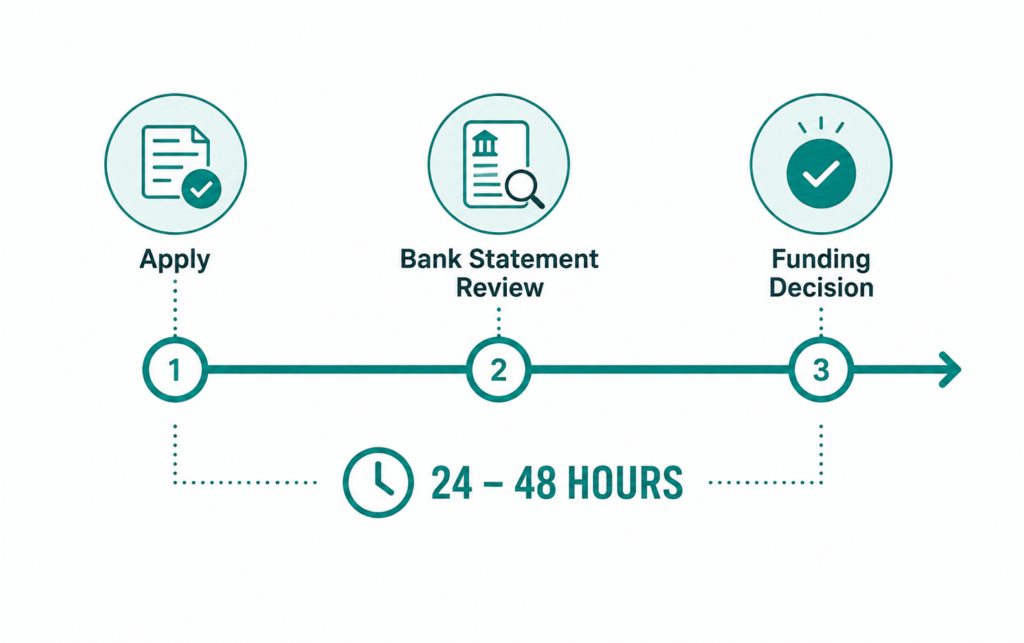
The process starts with a short application and a review of recent business bank statements, with most qualifying shops receiving a funding decision within 24 to 48 hours. Shops can explore funding options directly to see what’s available based on their revenue history, ideally before slow season fully sets in rather than after fixed costs have already outpaced winter revenue.
Get Ahead of Winter With Capital in 24-48 Hours
Shops that apply before slow season sets in see faster, more favorable funding decisions. No collateral required, and a dedicated account manager reviews every application personally.
Start Your Application →FAQ
Why does an auto repair shop run out of cash during slow season if it had a strong summer?
Repair shops face genuine seasonal swings in volume, often a 30 to 40% drop from summer peak to winter low, while fixed costs like rent, payroll, and equipment payments stay constant year-round. The gap between falling revenue and unchanged fixed costs is what creates the cash crunch, not poor performance during the slow months themselves.
Why don’t shops just lay off technicians during slow season to cut costs?
Experienced, certified technicians who are laid off often find other work rather than wait for seasonal rehiring, which means a shop that lays off staff during winter risks entering the next busy season understaffed and unable to capture available revenue. Most owners choose to retain technicians through the slow months, which is a cash decision more than a staffing decision.
How is this different from a bank loan for a slow month?
Banks typically evaluate a business’s most recent financial statements, which puts a shop applying during its slow season at a disadvantage since that’s exactly when its financials look weakest. Revenue-based financing evaluated against a longer window of bank statement history captures the shop’s full seasonal pattern rather than penalizing it for being in a temporary, predictable trough.
When is the best time to apply for financing ahead of slow season?
Applying in late fall, while recent bank statements still reflect strong summer and early fall revenue, generally produces a faster and more favorable outcome than applying after several months of declining winter statements have already accumulated.
How much funding is typically available for a seasonal gap like this?
Platform Funding offers funding from $5,000 to $3,000,000, depending on the business’s revenue and qualifications. Auto repair shops typically size a request to cover fixed costs, payroll, and inventory through the specific number of slow-season weeks or months they need to bridge.
Does equipment breakdown during slow season make this problem worse?
Yes. A lift, alignment machine, or diagnostic system failure during a slow month is harder to absorb financially when cash reserves are already thin from the seasonal revenue drop, and can leave a shop with reduced bay capacity heading into the next busy season if the repair or replacement is delayed.
Do I need a minimum credit score to qualify for this type of financing?
There’s no automatic credit score cutoff. Approval is based primarily on business revenue history and time in business, with a minimum of 6 months operating and $10,000 or more in average monthly revenue.
Is this financing specific to auto repair, or does it apply to other seasonal businesses?
The same working capital pattern applies broadly to seasonal businesses where fixed costs stay constant through a predictable revenue trough. Auto repair is a particularly clear example because the seasonal swing is driven by predictable driving and maintenance patterns rather than something the shop can control.
How fast can financing actually help once slow season has already started?
Funding is typically available within 24 to 48 hours for qualifying businesses, which means even a shop that didn’t plan ahead and is already mid-slow-season can still access capital quickly enough to cover an immediate payroll or parts inventory need.
Does this financing require collateral like shop equipment or the building?
No collateral is required. Approval is based on business revenue and operating history rather than pledged assets, which is a meaningful difference from bank financing options that may require a shop to put equipment or property up as security.