


A liquor store owner places a holiday order in early October: cases of premium spirits, seasonal gift sets, and enough wine to cover a six-week rush that starts around Thanksgiving and runs through New Year’s. The invoice is due well before a single bottle sells, and the store’s cash on hand, which normally covers payroll and routine restocking, suddenly has to stretch to cover an order two or three times the size of a typical month’s inventory buy.
Liquor store financing is capital that covers holiday and seasonal inventory purchases, renovations, and day-to-day cash flow for wine and spirits retailers, without requiring the store to deplete operating cash to place a large order. Platform Funding offers revenue-based financing, lines of credit, and business loans from $5,000 to $3,000,000 for stores with at least 6 months in business and $10,000 or more in monthly revenue, with a 95% approval rate and funding delivered in 24 to 48 hours. For a store owner who needs inventory on the shelf well before the holiday rush actually arrives, that turnaround means the order gets placed on time instead of getting scaled back to fit whatever cash happens to be on hand.
Why the Holiday Season Is a Cash Flow Squeeze, Not a Windfall
It’s easy to assume the holiday season is simply the best time of year for a liquor store financially, and for total sales, it usually is. But the sales come at the end of a period that starts with a large cash outlay, not the beginning of one. Distributors expect payment on holiday orders well before the season’s foot traffic materializes, and a store that waits until inventory actually sells to reorder risks running out of popular items right when demand peaks.
This timing mismatch is the real challenge, not the sales volume itself. A store owner has to commit real cash to inventory in October and November based on a forecast of December demand, and if that forecast requires ordering meaningfully more than usual, the cash needed to place the order can exceed what the store has comfortably available without straining payroll, rent, or other fixed costs due in the same window.
The mismatch is made worse by the fact that a store’s forecast for the holiday season is rarely a simple extension of an average month. A strong holiday season often means selling several times the normal monthly volume of certain high-demand items, gift sets, premium spirits, and specific wines that only move in large quantities during this narrow window each year. Getting that forecast right and having the cash to act on it are two separate problems, and a store can nail the forecast perfectly and still come up short on the second half of that equation.
What a Holiday Inventory Order Actually Costs
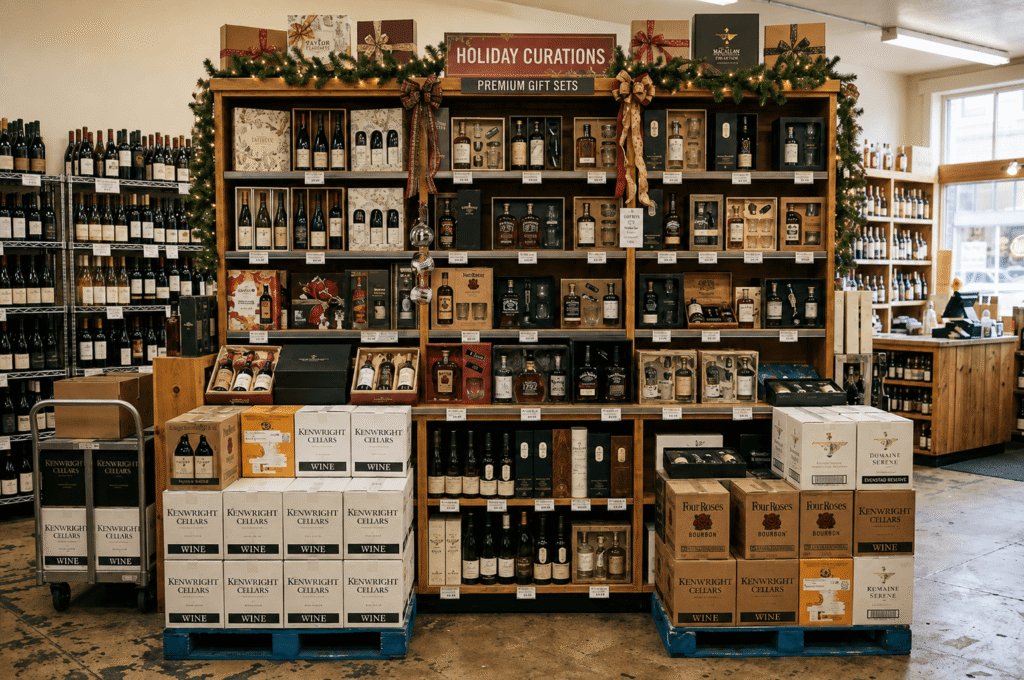
A liquor store doing steady mid-size volume might normally spend $15,000 to $25,000 a month on inventory. Heading into the holiday season, that same store often needs to place an order two to three times larger to stock enough premium spirits, wine, and gift sets to cover the rush, pushing a single order into the $40,000 to $70,000 range depending on the store’s size and typical holiday demand. That’s a significant jump in cash committed to inventory in a single purchase, timed weeks before the corresponding sales actually happen.
The exact size of that jump depends heavily on the store’s typical footprint. A smaller neighborhood liquor store with a tighter product mix might see its order grow from $10,000 in an average month to $25,000 or $30,000 heading into the holidays, while a larger store with a broader wine and spirits selection and an active gift-basket program can see a jump from $30,000 to $90,000 or more. In both cases the ratio matters more than the absolute number: the store needs two to three times its normal monthly cash outlay on inventory alone, on top of whatever payroll, rent, and other fixed costs are also due in the same weeks.
Stores that under-order to avoid the cash strain often end up with empty shelves on popular items during the exact weeks when customers are most likely to spend, losing sales to a competitor down the street who ordered more aggressively. Stores that over-extend on credit or drain their operating cash to place a full order risk being unable to cover payroll or rent in the following weeks if sales come in even slightly below forecast.
Neither outcome is acceptable for a store trying to have its best financial quarter of the year. The store that under-orders never gets those lost sales back, since a customer who couldn’t find their preferred bottle in December typically buys it somewhere else rather than waiting for restock. The store that over-extends on cash risks a strained January regardless of how well the holiday season actually went, simply because the timing of the outlay and the timing of the payroll and rent due dates don’t line up cleanly.
An Austin Liquor Store: A Real-World Scenario
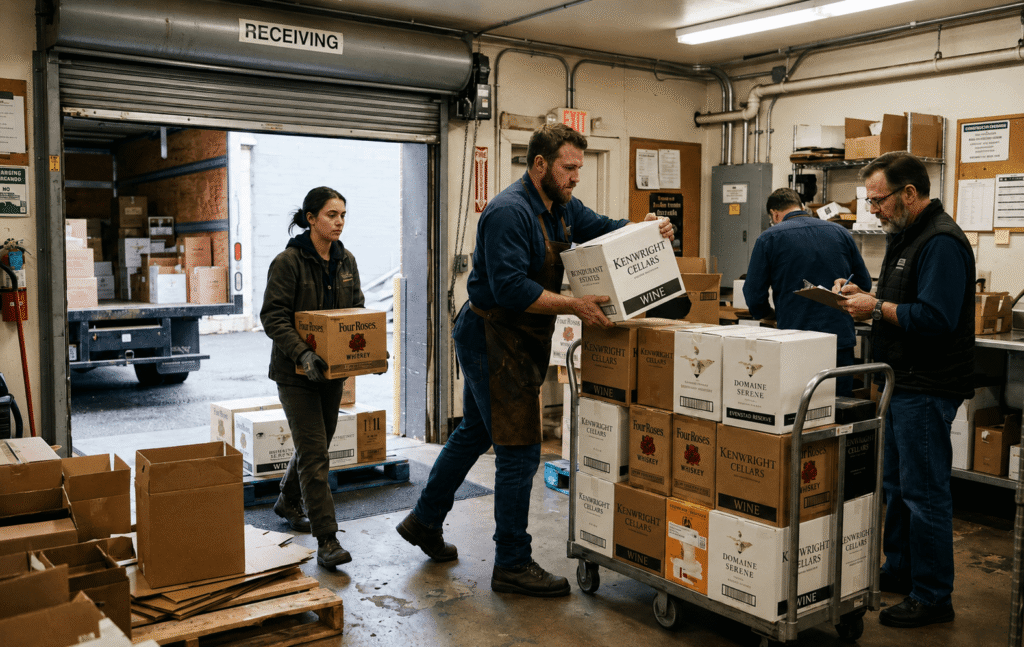
A liquor store in Austin, Texas, with strong repeat business and a growing gift-basket program, needed to place its annual holiday order in mid-October. Based on the previous year’s sales, the owner needed roughly $55,000 in inventory, more than double a typical month’s order, to stock enough premium spirits and gift sets to avoid running out during the December rush.
The store applied for revenue-based financing, submitting bank statements showing consistent monthly revenue through the rest of the year. Funding of $55,000 arrived within 48 hours, allowing the owner to place the full holiday order without touching the cash reserved for payroll and rent through the fall. The store sold through nearly all of the seasonal inventory by December 31st, and the financing was repaid as a percentage of the store’s daily sales, meaning the repayment naturally scaled up during the store’s highest-revenue weeks of the year.
What Liquor Store Financing Covers Beyond Holiday Inventory
Holiday and seasonal inventory is the most time-sensitive use case, but liquor store owners use this same type of financing for a range of other needs throughout the year. Store renovations and layout changes, expanding a wine selection or adding a tasting or gift-wrapping area, fall into this category, since these projects typically need to be paid for before they generate any additional revenue.
Marketing and customer acquisition costs around key selling seasons are another common use, covered in more detail in Platform Funding’s guide to retail spring marketing funding, which applies to liquor and wine retailers planning a promotional push around any seasonal peak, not just the holidays. General working capital to smooth over the gap between a large seasonal inventory buy and the season’s actual sales rounds out the most frequent applications, a scenario also covered from a broader retail lens in Platform Funding’s Memorial Day retail inventory financing guide.
Revenue-Based Financing vs. a Line of Credit for Liquor Retailers
A store placing one large, defined seasonal order, like the Austin example above, is usually well served by a lump-sum round of revenue-based financing, since the amount and the timing are both known well in advance. A line of credit tends to fit stores managing ongoing inventory reordering across multiple smaller purchasing cycles throughout the year, where the exact capital need shifts month to month rather than arriving as one large seasonal expense.
Many established liquor stores use both over time, drawing on a line of credit for routine restocking and layering in a round of revenue-based financing specifically for the holiday season or another major seasonal push. Platform Funding’s page on revenue-based financing and its dedicated wine and liquor store financing page both cover how these products apply specifically to the beverage alcohol retail space.
Qualification Requirements for Liquor Store Owners
Stores need at least 6 months in business and $10,000 or more in monthly revenue to qualify, regardless of whether the store specializes in spirits, wine, craft beer, or a broad general selection. A store that’s been open less than six months, or one with monthly revenue below the $10,000 threshold, generally isn’t a fit for this type of financing yet and should revisit the option once it has a longer operating history.
Approval isn’t guaranteed for every applicant. Platform Funding maintains a 95% approval rate among qualified stores, notably higher than what most retail businesses experience applying for a traditional bank loan, but underwriting still reviews bank deposit history and overall financial health before extending an offer. Store owners comparing this to traditional lending can review the SBA’s overview of business loan programs, and the FTC’s guidance on business credit and financing is worth reviewing before signing any financing agreement.
How the Application Process Works
Store owners apply through Platform Funding’s online application, providing basic business information along with three to six months of business bank statements. Underwriting reviews deposit history and revenue trends rather than requiring a full tax return package or extensive collateral documentation, which is a major part of why the process moves in days rather than the weeks a bank loan typically takes.
Most applicants receive a funding decision the same day they apply, and approved stores typically see funds in their account within 24 to 48 hours of accepting an offer, which matters most for a store owner working against a distributor’s payment deadline. Platform Funding’s how it works page and its complete guide to revenue-based financing both walk through the underwriting criteria for store owners deciding whether this is the right fit before applying.
Planning the Order Before the Deadline Hits
Distributor payment deadlines and delivery windows for the holiday season are fixed well in advance, which means a store owner who waits until the invoice arrives to figure out how to pay for it is already behind. The stores that handle this best treat holiday inventory financing as part of the planning process itself, lining up capital before the order needs to be placed rather than scrambling once the distributor’s payment terms are already in motion.
That preparation also pays off beyond the order itself. A store owner who knows in advance how the holiday order will be funded can commit to the full quantity a strong forecast actually calls for, rather than quietly scaling back the order to match available cash and risking empty shelves during the busiest weeks of the year. This is especially true for stores carrying a wider mix of price points, since a shortfall in premium spirits or gift sets is far more visible to a returning customer than a gap in everyday inventory, and word tends to travel fast in a neighborhood retail setting. Over multiple holiday seasons, that difference tends to show up directly in year-over-year sales, since a fully stocked store captures demand that an under-ordered one simply loses to competitors.
Why Trust Matters When Choosing a Financing Partner
Store owners are, understandably, cautious about who they borrow from heading into their busiest and most cash-intensive season of the year. Platform Funding has funded more than $2 billion to over 30,000 businesses, holds an A+ rating with the Better Business Bureau, and carries a 4.9 out of 5 rating across 575 verified reviews on Trustpilot. That track record is a reasonable starting point for evaluating a financing partner, though it doesn’t replace a store owner’s own due diligence into the specific terms being offered before committing to a decision that affects the store’s entire holiday season.
Store owners evaluating any financing partner for a decision this size should look past the headline numbers and read the actual terms of the offer, including the total repayment amount, the percentage of daily sales collected, and whether there’s a discount available for repaying early. A financing partner with strong review scores and a long funding history is a reasonable starting signal of reliability, but the specific terms attached to a particular offer are what actually determine whether the financing fits the store’s holiday cash flow, not the lender’s reputation alone.
Frequently Asked Questions
What is liquor store financing?
Liquor store financing is capital that covers holiday and seasonal inventory purchases, renovations, and day-to-day cash flow needs for wine and spirits retailers, without requiring the store to deplete its operating cash to place a large order. It’s built for established stores facing the timing mismatch between a large seasonal inventory buy and the sales that follow it. Platform Funding structures this as revenue-based financing, evaluating the store’s existing revenue rather than requiring the extensive collateral a bank loan typically demands.
Why is the holiday season a cash flow challenge instead of just a sales boost?
Distributors expect payment on holiday inventory orders well before the season’s foot traffic materializes, meaning a store has to commit significant cash to inventory in October and November based on a forecast of December demand. The sales come at the end of that cycle, not the beginning, which creates a real cash flow squeeze even for a store having a strong holiday season overall.
How much does a typical holiday inventory order cost?
A mid-size liquor store might normally spend $15,000 to $25,000 a month on inventory, but a holiday order is often two to three times that amount, commonly landing in the $40,000 to $70,000 range depending on the store’s size and expected demand.
How fast can a liquor store get funded?
Most qualified stores receive a funding decision the same day they apply, with funds typically arriving in the store’s bank account within 24 to 48 hours of accepting an offer, which matters directly against a distributor’s payment deadline.
What can this financing be used for besides holiday inventory?
Store owners also use this type of financing for renovations and layout changes, marketing and customer acquisition costs around key selling seasons, and general working capital to smooth over the gap between a seasonal inventory buy and the sales that follow it.
Does my store qualify if it’s fairly new?
A store needs to have been operating for at least 6 months and generate at least $10,000 in monthly revenue to qualify. Stores with less than 6 months of operating history typically aren’t a fit for this type of revenue-based financing.
What documents does a liquor store need to apply?
Applicants typically provide three to six months of business bank statements along with basic business information through Platform Funding’s online application, without needing a full tax return package or extensive collateral documentation.
Is revenue-based financing the same as a merchant cash advance?
No, revenue-based financing and a merchant cash advance are structured differently. Platform Funding’s product is built around a store’s ongoing revenue, with repayments that adjust based on actual sales performance rather than a fixed daily withdrawal regardless of how business is going.
How much funding can a liquor store receive?
Platform Funding offers financing from $5,000 to $3,000,000, with the specific amount determined by the store’s revenue history and overall financial profile during underwriting.
What happens if holiday sales come in lower than expected?
Because repayments on revenue-based financing are structured as a percentage of the store’s ongoing revenue rather than a fixed payment, a softer sales season typically results in a smaller repayment rather than a missed or strained payment.
Most liquor store owners complete the application in under 15 minutes. No collateral required. Your dedicated account manager reviews your application personally.
Start Your Application →