


Why Q1 Cash Flow Pressure Hits Seasonal Businesses So Hard
If Q1 feels like survival mode every year, you are not imagining it.
January and February consistently rank as the weakest revenue months for many small businesses. Sales cool off after the holidays, consumer spending tightens, and weather limits foot traffic. At the same time, rent, payroll, insurance, utilities, and existing debt payments remain unchanged.
Research shows that 54 percent of small businesses report February as their slowest month, while 44.6 percent experience a slow phase in January. Across industries, 30 to 60 percent of businesses deal with significant seasonal revenue fluctuations.
This creates a dangerous mismatch. Income drops, but financial obligations do not. For retail business owners and service-oriented professionals, Q1 cash flow management small business planning often determines whether the year begins stable or strained.
Many owners begin searching for answers after reviewing cash flow solutions for seasonal businesses that address predictable revenue dips without locking them into rigid monthly payments.
Seasonal Business Financing Options Explained
Seasonal business financing options help companies manage Q1 cash flow gaps by aligning repayment with actual revenue rather than fixed monthly payments. With revenue-based loans for seasonal businesses, payments automatically decrease during slow winter months and increase during peak seasons. This structure protects cash flow in January and February, when more than half of small businesses report their lowest revenue, while still allowing faster repayment when sales rebound.
How Seasonal Revenue Patterns Create Q1 Cash Flow Gaps
Seasonality is not a weakness in your business model. It is a predictable operating pattern.
Retail Businesses
Retailers often generate their strongest sales during November and December. January and February bring a sharp slowdown as holiday demand fades. Inventory purchased for Q4 still needs to be paid for, while foot traffic drops and margins tighten.
Many retailers experience a 30 to 50 percent decline in Q1 compared to Q4, which is why so many rely on retail business financing strategies designed for inventory-heavy seasons rather than traditional loans that assume consistent monthly income. This challenge is explored further in the Essential Guide to Retail Business Financing.
Service-Oriented Professionals
Service businesses face a different version of the same problem. Event planners, consultants, agencies, and professional firms may remain operationally busy while waiting longer to get paid. Extended invoice cycles tighten cash flow just as expenses continue.
Hospitality, Tourism, and Local Services
Restaurants, tourism operators, and location-based businesses feel winter slow season financing pressure most intensely. Weather reduces traffic, discretionary spending shrinks, and off-season demand exposes the weakness of fixed financial commitments.
Across industries, the issue is consistent. Revenue moves in cycles. Expenses rarely do.
How Does Seasonal Business Financing Work?
Seasonal business financing works by aligning repayments with actual revenue. Revenue-based financing collects a fixed percentage of sales, typically 8 to 15 percent, so payments fall during slow months and rise during busy periods. This structure prevents the cash flow strain created by fixed monthly loan payments that ignore seasonal revenue cycles.
This repayment alignment is why revenue-based loans for seasonal businesses outperform traditional lending during Q1.
Why Fixed Loan Payments Break Down During Q1
Traditional business loans assume steady monthly income. Seasonal businesses rarely operate that way.
A fixed payment may feel manageable during peak months, then become overwhelming during Q1. The same dollar amount suddenly consumes a much larger share of revenue, leaving little room for inventory, marketing, or payroll flexibility.
A deeper explanation of this mismatch is covered in working capital loans versus revenue-based financing.
How Revenue-Based Loans for Seasonal Businesses Solve the Problem
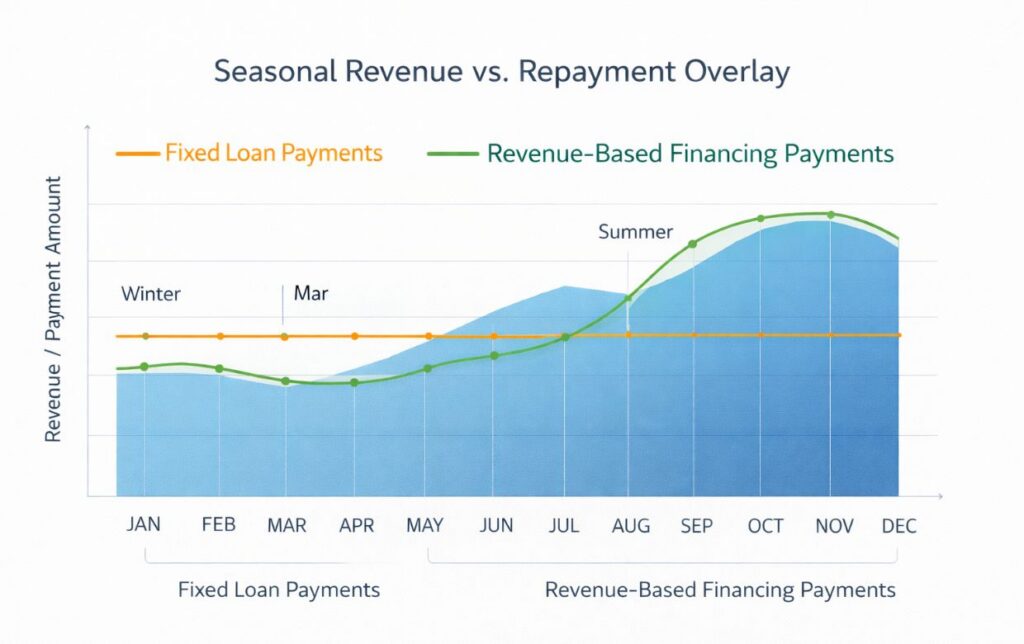
The most effective option for managing seasonal revenue swings, but some businesses also evaluate other tools depending on their situation.
Business Lines of Credit
Lines of credit provide flexible access to funds for short-term needs. Some owners maintain access through business line of credit options used for seasonal cash flow gaps, especially when expenses fluctuate unexpectedly.
That said, lines of credit usually require strong credit, consistent revenue, and disciplined repayment. Minimum payments may still apply during slow months, which can limit their usefulness during Q1.
Bridge and Equipment Financing
Bridge financing can help cover short, predictable gaps between seasons when a clear revenue rebound is already scheduled. It works best as a temporary solution rather than a long-term cash flow strategy.
Equipment financing preserves working capital when upgrades or replacements are necessary, but it typically comes with fixed repayment schedules. For seasonal businesses, fixed payments can still create pressure during low-revenue months.
For this reason, many seasonal business owners choose revenue-based financing as their primary cash flow solution, using other options only when they fit a very specific need.
Seasonal Business Success Stories
Seasonal businesses that succeed do not eliminate seasonality. They change how financing interacts with it.
- A beach-town retailer reduced winter payment pressure and prepared earlier for summer inventory.
- A ski-area restaurant stabilized summer cash flow without draining winter profits.
- A tax preparation firm expanded into year-round services and smoothed income beyond filing season.
Planning Ahead for the Next Q1
A strong seasonal strategy includes:
- Mapping monthly revenue patterns
- Identifying lowest cash flow periods
- Securing flexible seasonal business financing options before slow months
- Building reserves during peak season
Many owners also plan ahead by reviewing how small businesses prepare for Q3 using strategic cash flow financing, ensuring slow seasons never derail growth plans.
Frequently Asked Questions About Seasonal Business Financing
How do seasonal business financing options work?
Seasonal business financing options are designed to match how your business earns revenue throughout the year. Instead of fixed monthly payments, revenue-based financing adjusts repayment based on sales volume, which helps reduce pressure during slower Q1 months and allows faster repayment during peak seasons.
What is the best way to manage Q1 cash flow for a seasonal business?
For many seasonal businesses, revenue-based financing is the most effective option for Q1 cash flow management. Payments automatically decrease when revenue drops in January and February, helping businesses cover payroll, inventory, and operating expenses without taking on fixed payment obligations.
Can seasonal businesses qualify for financing during slow months?
Yes. Platform Funding evaluates full-year revenue patterns rather than focusing only on recent monthly performance. This approach allows seasonal businesses to qualify for funding even during slower periods like Q1, as long as the business shows consistent annual performance.
Why are fixed loan payments risky for seasonal businesses?
Fixed loan payments require the same payment amount regardless of revenue. During slow seasons, especially in Q1, these payments can consume a large percentage of income and strain cash flow. Financing that adjusts with revenue helps avoid this imbalance.
How fast can seasonal businesses receive funding?
Platform Funding typically provides funding decisions within 24 to 48 hours. Once approved, capital can be delivered quickly, allowing business owners to address seasonal cash flow gaps without long delays common with traditional banks.
How much funding can a seasonal business access?
Seasonal businesses may qualify for funding amounts ranging from $5,000 to $500,000, depending on revenue history, time in business, and overall financial performance. Many businesses use this capital for inventory, payroll, marketing, or operating expenses during slower seasons.
Does revenue-based financing require collateral?
No. Revenue-based financing through Platform Funding does not require collateral. Approval is based on business performance and revenue trends rather than hard assets or property.
Is revenue-based financing the same as a traditional loan?
No. Revenue-based financing differs from traditional loans because repayment adjusts with sales instead of following a fixed monthly schedule. This flexibility makes it better suited for businesses with seasonal or fluctuating revenue patterns.
What types of businesses use seasonal financing most often?
Retailers, service-based businesses, hospitality companies, restaurants, and other seasonal operations frequently use seasonal financing to manage post-holiday slowdowns, winter revenue dips, and uneven cash flow throughout the year.
When should a seasonal business apply for financing?
Many business owners apply before the slow season begins, often in late Q4 or early Q1, to ensure capital is available when revenue dips. Applying early helps avoid last-minute cash flow stress and provides more flexibility in planning.

Get Seasonal Business Financing That Adjusts With Your Q1 Revenue
Seasonal revenue cycles are normal. Cash flow stress does not have to be.
When financing aligns with how your business actually earns money, Q1 becomes manageable instead of disruptive. Seasonal business financing options built around revenue alignment help protect payroll, inventory, and daily operations during post-holiday slowdowns.
Talk with Platform Funding about flexible Q1 cash flow solutions today and see how revenue-based financing can support your business through slow months without fixed payment pressure.