

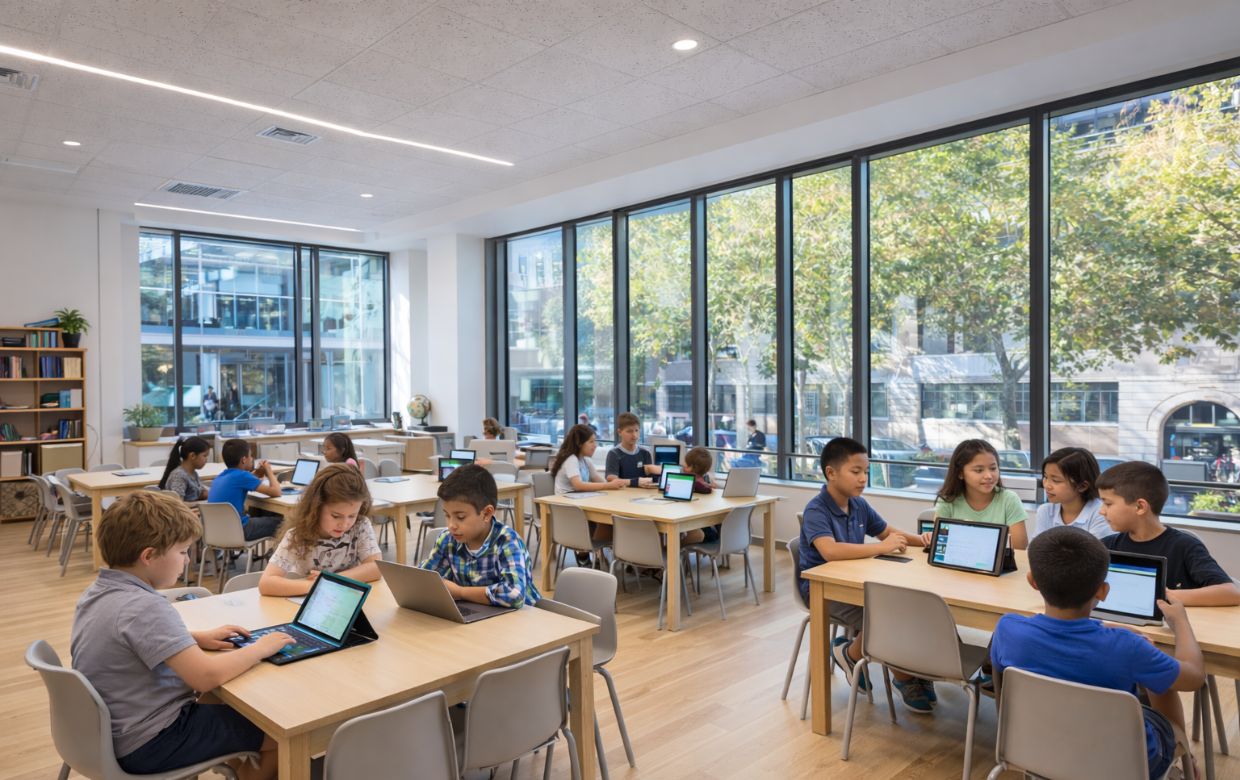
Private school financing provides capital for independent schools, preschools, and educational institutions to fund facility upgrades, technology purchases, payroll support, and operational costs. Options include revenue-based financing ($25,000-$500,000, based on tuition revenue), equipment financing (classroom technology and playground equipment), lines of credit (cash flow management), and specialized education loans with repayment structures aligned to academic calendar enrollment cycles.
Running a private school requires balancing educational excellence with financial stability. Traditional banks often reject school loan applications because they misunderstand tuition-based revenue patterns and seasonal cash flow cycles. Platform Funding achieves a 95% approval rate for educational institutions by recognizing how schools generate income differently than typical businesses.
Fast capital access matters for schools competing to attract families. A delayed technology upgrade or postponed facility improvement can mean losing prospective students to better-equipped competitors. Platform Funding’s 24-48 hour funding decisions help schools seize time-sensitive opportunities, including preschool financing needs and K-12 expansion projects.
Understanding Private School Financial Challenges
Educational institutions face unique cash flow obstacles that traditional lenders fail to appreciate. According to the National Center for Education Statistics, private school enrollment represents over 5 million students nationwide, yet these schools often struggle to access appropriate financing despite serving critical educational needs.
Tuition Payment Cycles Create Cash Flow Gaps
Most private schools collect tuition quarterly, semi-annually, or annually. Summer months bring zero tuition income while expenses continue uninterrupted. Staff salaries, utilities, insurance, and maintenance costs remain constant regardless of when families pay tuition. Seasonal business financing strategies help schools bridge these predictable revenue gaps.
Revenue-based financing addresses this challenge by adjusting repayment amounts based on actual cash flow patterns, making it ideal for schools facing cyclical income.
Rising Operational Costs Pressure School Budgets
Competitive teacher salaries continue rising as schools compete for qualified educators. Technology integration demands increase yearly as parents expect modern learning environments. These mounting expenses occur while tuition increases face resistance from cost-conscious families. Schools need working capital solutions to bridge the gap between necessary investments and available revenue.
Growth Requires Upfront Capital Investment
Facility improvements must happen before enrollment grows to justify the expense. Marketing campaigns to attract new students require payment before results materialize. Schools cannot wait for tuition revenue to accumulate before making these critical investments. Growing your business without diluting equity becomes essential for maintaining school ownership and control.
Traditional Banks Misunderstand Education Revenue Models
Banks often view tuition revenue as “unstable” compared to commercial businesses. The 30-90 day bank approval process moves too slowly for time-sensitive school opportunities. Platform Funding’s 95% approval rate compares favorably to the 27% approval rate for small business loans at traditional banks. Revenue-based financing structures match the reality of how schools generate and receive income.

Private School Financing Options Explained
Not all financing products work equally well for educational institutions. Understanding how different options align with school operations helps administrators choose the most appropriate capital solution.
| Financing Type | Amount Range | Approval Time | Best For | Repayment Structure |
| Revenue-Based Financing | $25K-$500K | 24-48 hours | Facility upgrades, technology, summer payroll | 5-12% of monthly revenue |
| Lines of Credit | $25K-$250K | 5-10 days | Cash flow gaps, emergencies, seasonal needs | Interest on used funds only |
| Equipment Financing | $10K-$200K | 3-7 days | Classroom tech, playground, buses, HVAC | Fixed monthly payments |
| Business Loans | $25K-$500K | 3-7 days | Expansion, major renovations, acquisitions | Fixed monthly payments |
Revenue-Based Financing for Schools (Platform Funding Specialty)
This financing structure adapts to tuition-based revenue patterns better than any other funding option. Repayment comes from a percentage of monthly revenue rather than a fixed dollar amount, making it perfect for preschool financing and elementary school operations.
How It Works for Schools:
- Repayment: 5-12% of monthly tuition revenue
- Amount: $25,000-$500,000
- Timeline: 24-48 hour approval and funding
- Term: 6-18 months
Why This Model Benefits Schools:
Revenue-based financing adjusts automatically to school income patterns. Higher tuition revenue during the school year means more affordable payments. Lower summer revenue triggers lower payments that match available cash flow. This structure works exceptionally well for service business financing needs where revenue fluctuates predictably.
Schools receive capital quickly when opportunities arise. A sudden HVAC failure in July, a competing school’s closure creating enrollment opportunities, or an unexpected facility issue all require immediate response.
Best Use Cases:
- Facility upgrades before the school year begins
- Technology purchases and classroom equipment
- Summer payroll support during zero-revenue months
- Emergency repairs requiring immediate attention
- Marketing campaigns for enrollment growth
Ready to see if your school qualifies? Contact Platform Funding for a preliminary funding decision within hours.
Business Lines of Credit for Educational Institutions
Lines of credit function like a safety net for schools facing unpredictable expenses or timing gaps. Understanding when to use a line of credit helps schools maximize this flexible funding option.
How Lines of Credit Work:
- Amount: $25,000-$250,000
- Structure: Draw funds as needed, repay and reuse
- Interest: Charged only on funds actually used
- Timeline: 5-10 days for approval
Lines of credit bridge summer cash flow gaps when tuition revenue pauses. Delayed tuition payments from families on payment plans become manageable. Emergency facility repairs get addressed immediately without scrambling for funding.
Equipment Financing and Leasing for Schools
Specific equipment purchases often qualify for specialized financing where the equipment itself provides security. Schools should evaluate equipment leasing vs. business loans to determine the best approach for their situation.
What Schools Can Finance:
- Classroom technology (computers, tablets, interactive whiteboards)
- Science laboratory equipment and supplies
- Playground structures and outdoor equipment
- School buses and transportation vehicles
- Kitchen and cafeteria equipment
- Security cameras and access control systems
- HVAC systems and facility equipment
Leasing preserves working capital for other school needs. Technology equipment that becomes obsolete quickly benefits from lease structures. Equipment leasing strategies help schools stay current without large capital outlays.
Business Loans for School Expansion
Traditional business loan structures work well for specific school projects with clear timelines and defined purposes. Comparing business loans vs. lines of credit helps schools choose the right funding approach.
Best Use Cases:
- New location expansion or additional buildings
- Major renovation projects with defined costs
- Acquiring another school or educational property
- Large-scale facility improvements
- Significant technology infrastructure upgrades
Schools with predictable tuition revenue can manage fixed monthly payments effectively during all months, including summer revenue gaps.
Private School Financing Requirements and Qualifications
Understanding qualification criteria helps schools prepare applications efficiently. Platform Funding’s requirements specifically accommodate educational institutions.
Basic Qualification Standards:
Most lenders require schools to demonstrate minimum operational history. Twelve months of operation show established enrollment patterns. Monthly revenue requirements vary by funding amount requested. Schools generating $15,000-$25,000 monthly typically qualify for most programs.
Credit Review Process:
Both institutional and personal credit receive evaluation. School administrators’ credit history influences approval decisions. Platform Funding focuses more on revenue patterns than credit scores alone. Strong tuition revenue and healthy enrollment can overcome imperfect credit history. Even schools with limited credit history can access funding through Platform Funding’s 95% approval rate.
Financial Documentation Needed:
Bank statements covering 3-6 months show actual cash flow patterns. Enrollment data and tuition rate sheets help lenders understand revenue capacity. Current student counts and projected enrollment provide context for revenue evaluation. The business loan application preparation process helps schools gather necessary documentation efficiently.
Application Timeline and Process:
Initial applications take 15-30 minutes to complete online. Preliminary decisions often arrive within hours of submission. Full approval with funding terms typically takes 24-48 hours. Actual funding deposit occurs within 1-2 business days after final approval.
Managing School Cash Flow Effectively
Strategic cash flow management reduces the frequency of external financing needs. Research from the National Association of Independent Schools shows that schools with proactive cash flow strategies maintain stronger financial stability and can better weather enrollment fluctuations.
Summer Planning Strategies:
Schools should build summer reserve funds during high-revenue school months. Setting aside 10-15% of monthly tuition during the academic year creates summer cushions. Alternative programs and summer camps generate off-season revenue. Extended daycare services keep facilities productive year-round.
Understanding cash flow solutions for seasonal businesses helps schools implement effective planning strategies throughout the year.
Enrollment and Tuition Planning:
Strategic enrollment timing helps smooth cash flow. Rolling admissions throughout the year bring new tuition revenue at regular intervals. Tuition payment plans should balance family preferences with school cash flow needs. Monthly payment options spread revenue throughout the year.
Facility and Expense Management:
Major facility projects should coordinate with cash flow cycles. Summer projects start after semester tuition payments arrive. Energy efficiency investments reduce ongoing operational costs. Modern HVAC systems, LED lighting, and insulation upgrades lower monthly expenses.
Regular maintenance prevents expensive emergency repairs. Schools should budget for ongoing facility upkeep rather than deferring problems. Managing rapid growth without cash flow problems becomes critical as enrollment expands.
Common Private School Financing Questions
How quickly can private schools get approved for financing?
Platform Funding provides preliminary funding decisions within hours of application submission. Complete approval with final terms typically takes 24-48 hours. After final approval, funding deposits arrive in school bank accounts within 1-2 business days. This speed helps schools address time-sensitive opportunities or urgent facility needs. Traditional bank loans require 30-90 days from application to funding.
Do nonprofit private schools qualify for business financing?
Yes, nonprofit private schools qualify for most business financing programs. Platform Funding works with both for-profit and nonprofit educational institutions. The school’s revenue model and cash flow patterns matter more than tax status for approval decisions. Nonprofit status may affect certain financing options but doesn’t prevent accessing capital.
Can new private schools get financing in their first year?
Schools operating for at least 12 months qualify for most financing programs. Some programs consider schools with shorter operational histories if enrollment projections and revenue patterns show strength. New schools should demonstrate committed enrollment and realistic financial projections.
How do seasonal revenue patterns affect school financing?
Revenue-based financing specifically accommodates seasonal tuition patterns. Repayments adjust automatically based on monthly revenue levels. Higher payments occur during high-tuition months. Lower payments happen during summer when tuition revenue decreases. This structure prevents cash flow strain during predictable low-revenue periods.
What interest rates should private schools expect?
Interest rates and factor rates vary based on school financial strength, operational history, and funding amount. Revenue-based financing typically shows factor rates of 1.1-1.3, meaning schools repay $1.10-$1.30 for each dollar borrowed. Traditional business loans often show APRs of 8-25%, depending on qualifications. Platform Funding provides specific rates during the approval process based on individual school evaluation.
Can schools get multiple rounds of financing?
Yes, schools can access additional funding after successfully repaying previous financing. Many schools use multiple rounds to fund different projects over time. Platform Funding maintains relationships with schools throughout growth phases. Successful repayment history often improves terms on subsequent funding rounds. How to fund business growth strategically helps schools plan major projects.
How does school enrollment size affect financing eligibility?
Financing eligibility depends more on monthly revenue than specific enrollment numbers. Schools generating $15,000-$25,000 monthly revenue typically qualify for most programs. Small schools with high tuition can qualify with fewer students. Larger schools with lower tuition need higher enrollment for the same revenue level.
What happens if enrollment drops during repayment?
Revenue-based financing automatically adjusts to enrollment changes. Lower tuition revenue triggers proportionally lower repayments. This protection prevents cash flow crises during temporary enrollment challenges. Fixed-payment loans require maintaining payments regardless of revenue changes. Schools should communicate proactively with lenders about significant enrollment shifts.
Can schools finance both preschool and K-12 operations?
Yes, preschool financing and K-12 school financing both qualify for Platform Funding programs. Preschools often benefit from revenue-based structures that accommodate parent payment schedules and seasonal enrollment patterns. Elementary schools, middle schools, and high schools all qualify based on their tuition revenue and operational history.
Do schools need collateral for financing?
Most revenue-based financing and working capital programs don’t require specific collateral beyond a general lien on business assets. Equipment financing uses the purchased equipment as collateral. Schools without significant physical assets can still qualify for many programs based on revenue strength. Platform Funding’s 95% approval rate reflects programs designed for service businesses without extensive physical collateral.
What technology purchases qualify for school equipment financing?
Most classroom technology qualifies for equipment financing, including computers, tablets, interactive whiteboards, projectors, science lab equipment, library systems, administrative software and servers, security and access control systems, and audiovisual equipment. The equipment must have clear value and a reasonable lifespan.
Can private schools finance playground and athletic facility improvements?
Yes, playground equipment, athletic facilities, and outdoor improvements qualify for equipment financing or business loans. Playground structures, athletic field and track surfaces, gymnasium equipment, sports equipment and storage, outdoor classroom spaces, and parking lot improvements all represent fundable projects.
Should schools use financing for operational expenses or only capital improvements?
Schools appropriately use financing for both strategic purposes. Capital improvements like facilities, technology, and equipment represent investments generating long-term value. Operational expenses like summer payroll, emergency repairs, and marketing campaigns maintain and grow the school. Strategic use of working capital financing bridges temporary gaps without compromising educational quality.
Can schools refinance existing debt to improve cash flow?
Yes, schools with existing debt can potentially refinance to more favorable terms or structures. Revenue-based financing might provide better seasonal alignment than fixed-payment loans. Consolidating multiple debts can simplify management and potentially reduce total payments. Understanding when refinancing makes sense helps schools evaluate opportunities strategically.
How far in advance should schools apply for financing?
Schools should apply when identifying specific needs rather than waiting until urgency creates pressure. The 24-48 hour approval timeline makes advance planning less critical than with traditional banks. However, applying before absolute necessity allows time for questions and deliberate decision-making. Schools planning major projects should discuss timing with Platform Funding to coordinate funding with project schedules.
Get Fast Private School Financing Approval Today
Private schools deserve financing partners who understand educational institutions’ unique operational patterns. Platform Funding specializes in providing capital solutions aligned with tuition cycles and enrollment patterns. The 95% approval rate and 24-48 hour funding timeline help schools act on opportunities when they arise.
School administrators can focus on educational excellence rather than cash flow stress. Revenue-based financing adjusts to your school’s income patterns automatically. Technology upgrades, facility improvements, preschool financing needs, and operational expenses all qualify for fast approval.
Contact Platform Funding today to discuss your private school financing needs. Our education financing specialists understand how schools operate and what challenges you face. Get a preliminary funding decision within hours and access capital within days.
Call (866) 473-1455 or apply online to start your approval process. Join thousands of businesses that have accessed over $2 billion in flexible financing. Your school’s growth and improvement projects deserve financing that works with your operations, not against them.