


Why Spring Inventory Is Decided Before Spring Begins
Spring sales don’t start in April.
They start when inventory orders are placed in February.
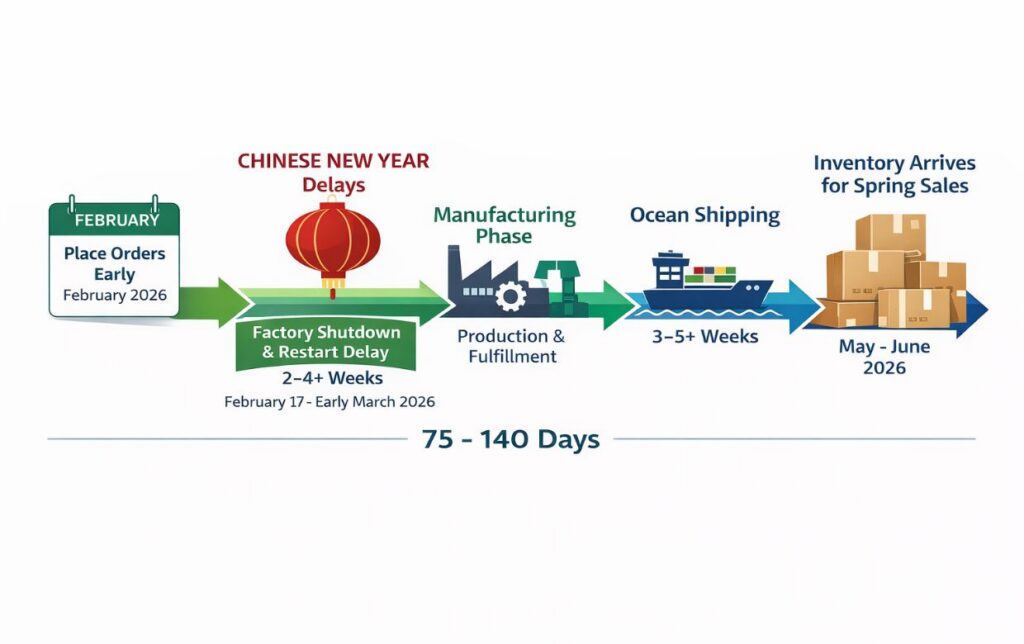
For most ecommerce sellers, inventory ordered today does not arrive for 75 to 140 days. That timeline includes manufacturing, quality checks, ocean freight, customs clearance, and final delivery. Add Chinese New Year into the mix, and delays compound fast.
Miss this window and even strong demand won’t save you. Customers don’t wait.
43% switch to competitors permanently when products are out of stock .
This is where ecommerce inventory financing becomes a strategic growth tool rather than a short-term fix.
The February 2026 Inventory Window Explained Simply
Let’s remove the guesswork.
Most overseas inventory follows this sequence:
- Manufacturing: 30–45 days
- Shipping and customs: 30–60 days
- Total lead time: 75–140 days
Now factor in Chinese New Year on February 17, 2026, when factories shut down and reopen slowly with major backlogs.
If you order:
- Early February: inventory lands May–June
- Mid-March: inventory lands late June or July
- April: peak season already lost
That’s why February is the line between stocked stores and missed revenue.
What Happens When Sellers Miss This Window
Missing the spring inventory window creates a chain reaction:
- Supplier discounts disappear
- Production slots move to competitors
- Shipping queues lengthen
- Stockouts erode rankings and reviews
- Paid ads burn budget without inventory to convert
For many categories, June and July represent 30–40% of annual revenue. Missing even part of that period can erase an entire year’s growth.
This risk is exactly why many online sellers move away from slow bank approvals and toward fast funding for online businesses that matches ecommerce timelines.
How Ecommerce Inventory Financing Actually Works
At a high level, ecommerce inventory financing provides upfront capital specifically for inventory purchases. What matters is how repayment aligns with revenue.
The core options sellers consider:
- Traditional bank loans
- Platform-embedded lending
- Revenue-based financing
For seasonal ecommerce, revenue-based structures tend to fit best because repayment adjusts with sales rather than forcing fixed monthly payments during slow months.
Platform Funding specializes in revenue-based financing for ecommerce, allowing sellers to fund inventory while keeping cash flow flexible. You can see how this compares with fixed debt in this breakdown of working capital loans versus revenue-based financing.
Why Revenue-Based Financing Fits Spring Inventory Cycles
Inventory costs hit first. Revenue follows later.
That mismatch creates stress when repayment is fixed. Revenue-based financing solves that by tying repayment to daily sales.
When revenue is lower, payments stay lower.
When revenue rises, repayment accelerates without penalties.
This structure works especially well for:
- Spring inventory builds
- New product launches
- Paid media ramp-ups
- Multichannel expansion
Platform Funding offers funding decisions in 24–48 hours, which allows sellers to meet supplier deadlines instead of losing margin while waiting weeks for approval.
Shopify Store Financing Options for Spring Growth
Shopify sellers face two consistent challenges ahead of spring:
- Inventory must arrive before campaigns scale
- Ad spend often ramps before revenue peaks
With Shopify store financing options, underwriting focuses on real store performance rather than projections or collateral. By connecting Shopify data directly, funding decisions reflect actual sales patterns.
Many Shopify brands pair inventory financing with guidance like this article on how working capital helps scale operations faster to avoid cash strain during growth phases.
Amazon Seller Inventory Loans and the FBA Cash Gap
Amazon sellers operate on a delayed cash cycle.
Inventory must ship to fulfillment centers weeks before sales settle. Fees, reserves, and returns further delay usable cash.
Amazon seller inventory loans help bridge that gap by funding:
- Bulk overseas orders
- FBA prep and freight
- Seasonal restocks
- New ASIN launches
For sellers operating on both Amazon and DTC channels, revenue can be aggregated across platforms. This reduces reliance on a single marketplace and supports larger funding approvals.
Related insight on inventory planning can be found in inventory financing solutions for retail growth.
Five Situations Where Inventory Financing Becomes Critical
Inventory financing isn’t just about spring. It shows up repeatedly in these scenarios:
1. Seasonal Stock-Ups
Peak seasons require inventory months before sales occur.
2. Supplier Bulk Discounts
Early orders often come with 10–20% pricing advantages.
3. Viral Demand
Social spikes collapse inventory faster than cash can replenish it.
4. Channel Expansion
Launching Amazon, Walmart, or wholesale requires parallel inventory.
5. Competitive Stockouts
When competitors run out, prepared sellers gain lasting market share.
Each scenario favors speed and flexibility over traditional lending timelines. That’s why many sellers rely on online retail working capital for 2026 designed specifically for ecommerce cycles.
How to Finance Inventory for an Ecommerce Business
Ecommerce businesses finance inventory using revenue-based financing, platform lending, or working capital loans. Revenue-based options offer fast approvals, flexible repayment tied to sales, and support seasonal inventory cycles without fixed monthly pressure.
A Clear Step-by-Step Approach to Spring Inventory Financing
- Forecast spring demand conservatively
- Confirm supplier pricing and deadlines
- Identify the cash gap between order and sales
- Apply for inventory financing early
- Secure production slots before delays
- Align fulfillment and marketing timelines
This approach protects both revenue timing and customer experience.
Inventory Financing and Risk Management
Financing inventory requires discipline.
Strong operators pair funding with:
- SKU-level demand forecasting
- Buffer stock for shipping delays
- Clear reorder triggers
- Margin analysis before scaling
- Exit plans for slow-moving inventory
For sellers navigating rapid growth, this article on surviving success and preventing cash flow nightmares offers practical guidance.
Why Platform Funding Fits Ecommerce Sellers
Platform Funding supports ecommerce brands with:
- Funding decisions in 24–48 hours
- Revenue-based repayment tied to sales
- Support for Shopify, Amazon, and multichannel sellers
- Inventory-focused underwriting
- Growth-oriented capital structures
Rather than forcing ecommerce businesses into rigid loan models, Platform Funding aligns capital with how online revenue actually flows.
E-commerce Inventory Financing FAQs
How do I finance inventory for my ecommerce business?
Ecommerce businesses typically finance inventory using revenue-based financing, platform lending, or traditional working capital loans. Revenue-based financing is often preferred because it provides fast access to capital and repayment adjusts based on daily sales. This allows sellers to order inventory months in advance without fixed monthly payments that strain cash flow during slower periods.
Why is February critical for spring inventory orders?
February is critical because ecommerce inventory often requires 75–140 days to reach U.S. warehouses. Manufacturing lead times, ocean freight, customs, and Chinese New Year factory shutdowns all stack together. Orders placed after February often arrive too late for peak spring and early summer sales, resulting in missed revenue and customer churn.
Can Shopify stores qualify for inventory financing?
Yes. Shopify sellers can qualify for inventory financing by connecting their store data during the application process. Lenders review real sales performance, seasonality, and growth trends rather than relying only on credit scores. This makes financing accessible even for newer Shopify stores with strong revenue consistency.
Are Amazon seller inventory loans available for FBA businesses?
Yes. Amazon FBA sellers can access inventory financing by sharing Seller Central data or settlement reports. Financing accounts for Amazon-specific factors like reserve holds, fees, and fulfillment timelines. Repayment is usually based on settled sales, which helps align payments with actual cash flow.
How fast can I get inventory financing for spring sales?
With ecommerce-focused lenders like Platform Funding, funding decisions are typically issued within 24–48 hours. Capital often reaches your business account within a few days, allowing sellers to meet supplier deadlines, secure early order discounts, and lock production slots before delays occur.
What is revenue-based financing and how does repayment work?
Revenue-based financing provides upfront capital that is repaid as a fixed percentage of daily sales. When revenue is lower, payments decrease automatically. When sales increase during peak seasons, repayment accelerates without penalties. This structure aligns well with seasonal ecommerce businesses.
Is inventory financing risky for ecommerce sellers?
Inventory financing carries risk if demand is overestimated or margins are thin. Sellers reduce risk by forecasting conservatively, ordering buffer stock carefully, tracking sell-through rates, and ensuring financing costs are outweighed by captured revenue and supplier discounts.

Ecommerce Inventory Financing: Secure Spring Sales Before Peak Season
Spring success is determined long before customers shop.
The brands that win place inventory orders early, protect supplier pricing, and avoid stockouts when demand peaks. Ecommerce inventory financing gives sellers the flexibility to do exactly that without draining operating cash.
If you’re planning spring inventory, talk with Platform Funding now. Review your funding options, approval timeline, and inventory strategy before supplier deadlines close.