

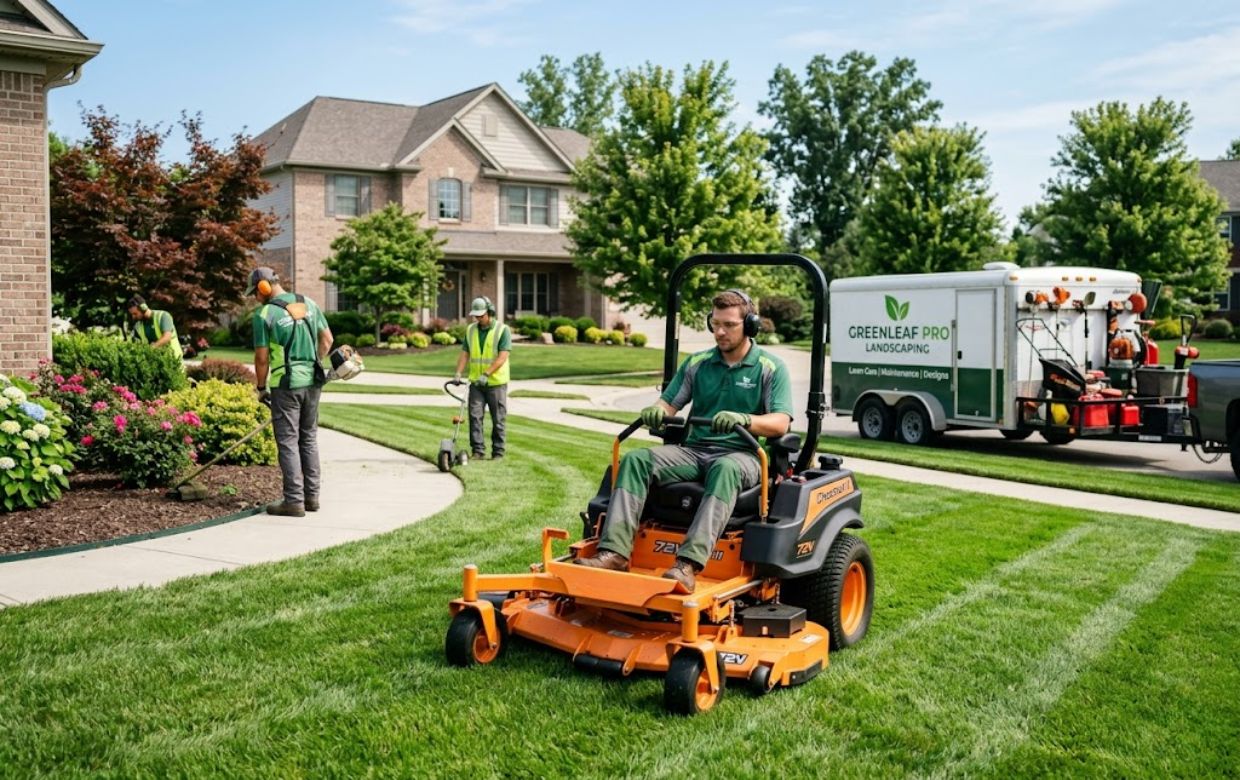
May kicks off peak season for landscaping businesses. According to the National Association of Landscape Professionals, 68% of annual revenue hits between March and September. Spring booking requests jump 3.4 times higher than winter. Twenty-six percent of companies add seasonal staff specifically for this surge.
You need commercial equipment ready before the first contract starts, crews hired and trained before day one, and materials paid to suppliers upfront. Yet cash reserves sit at their lowest point after months of reduced winter revenue.
Banks don’t understand seasonal service businesses. They see inconsistent monthly revenue and classify the business as high risk. Traditional loans require 60 to 90 days for approval, which pushes equipment acquisition into June and costs you your most profitable spring weeks. Even when approval comes through, fixed monthly payments don’t flex when weather disrupts 31% of landscaping appointments (NALP data) or when revenue dips between peak months.
Platform Funding is an alternative lender specializing in revenue-based financing for small businesses. Equipment financing combined with working capital solves both problems: finance your mowers, trucks, and tools while securing operational capital for payroll, fuel, and supplies. Revenue-based repayment aligns with your concentrated May through September earnings and adjusts automatically during weather delays or slower stretches. Platform Funding specializes in both equipment financing for landscaping businesses and revenue-based working capital, giving you a complete capital solution for your seasonal operation.
Understanding Landscaping’s Peak Season Dynamics
The landscaping industry runs on sharp seasonal patterns that dictate when you earn revenue and when you need capital in place.
Regional Revenue Patterns
Peak season timing varies by geography but follows consistent patterns. The South holds 37.8% of industry market share, driven by warmer climates that allow near-year-round operations. Northern states compress revenue into a tighter April through October window, with spring cleanup, summer maintenance, and fall preparation driving the bulk of annual income.
The Northeast benefits from supplemental seasonal services, including spring garden preparation, summer lawn maintenance, fall cleanup, and winter snow removal. That service mix helps even out cash flow but still concentrates the majority of landscaping revenue in warmer months.
Booking and Revenue Concentration
The 3.4x increase in spring booking requests creates real operational pressure. You’re completing spring cleanup contracts, scheduling weekly maintenance agreements, and bidding installation projects all at once. That volume requires adequate equipment capacity and enough crew to handle concurrent jobs without turning away profitable work.
Weather-related appointment rescheduling affects 31% of bookings and disrupts cash flow projections. Rain delays, extreme heat, or drought can compress your revenue into fewer working days, which is why financial flexibility matters more in landscaping than in most service industries. Understanding how to manage seasonal cash flow gaps is as important as the equipment itself.
Equipment Investment Requirements
Landscaping businesses need substantial equipment in place before peak season begins. Typical costs vary based on service offerings and business size.
Core Equipment Costs
Commercial zero-turn mowers represent your largest equipment expense at approximately $35,000 for new models. These machines are essential for handling large properties and commercial contracts efficiently. Many landscaping businesses operate two to four zero-turn mowers to run multiple crews simultaneously and keep backup available during maintenance.
Walk-behind mowers run $300 to $2,500 for residential properties that need tighter maneuverability. String trimmers ($100 to $600), edgers ($100 to $300), and leaf blowers ($100 to $500) round out the core toolkit. Hand tools add another $50 to $1,000 depending on quality and quantity.
Specialized equipment expands what you can offer. Aerators run $1,000 to $3,000, dethatchers cost $500 to $1,500, and commercial sprayers range from $100 to $500. These investments unlock additional services that command premium pricing and raise average contract values.
Transportation Needs
Used trucks suitable for landscaping operations cost $15,000 to $25,000. Equipment trailers range from $800 for basic models to $4,000 for larger enclosed trailers with custom configurations. Most businesses need multiple vehicles and trailers as crew size expands to handle peak-season volume.
Total Startup Investment
A lean solo operation starting with basic equipment and an existing vehicle needs $500 to $8,000 in equipment. A full commercial setup with commercial-grade equipment, a used truck, a trailer, insurance, and licensing requires $28,000 to $53,000. Larger operations running multiple crews with premium equipment can exceed $50,000 in initial capital.
Platform Funding provides $5,000 to $500,000 in 24-48 hours with a 95% approval rate. Repayment scales automatically with your seasonal revenue — lower in winter, higher during peak months.
Finance Your Equipment Now →Ongoing Operating Expenses
Equipment purchases represent only part of your capital needs. Monthly operating expenses consume cash throughout peak season when jobs are running daily.
Vehicle and Equipment Operating Costs
Each truck burns $250 to $400 monthly in fuel during active season. Vehicle maintenance adds another $200 to $350 per truck monthly. Equipment maintenance across all mowers, trimmers, and tools runs $400 to $800 monthly under daily use.
Industry best practice calls for budgeting 15% to 25% of equipment value annually for maintenance and repairs. Setting aside 10% to 15% of equipment value annually for replacement reserves ensures you can handle equipment failures without disrupting operations. Working capital for scaling gives you the cushion to act on both without depleting operating cash.
Facility and Overhead
Shop or warehouse rent ranges from $2,500 to $8,000 monthly depending on location and space requirements. Utilities add $300 to $800 monthly. These fixed costs continue through slower winter months, which is why year-round cash flow management is non-negotiable for landscaping businesses.
Labor Costs
Peak season payroll is your largest expense. The 26% of companies that hire seasonal staff face recruitment, training, and payroll costs before the revenue from those hires arrives. Labor shortages continue driving wages higher in 2026, with NIP Group reporting ongoing pressure on landscaping businesses to offer competitive compensation to attract and retain quality crew members. When payroll timing gets tight, a working capital loan gives you the bridge to cover staff before client invoices clear.

Cash Flow Challenges in Seasonal Operations
The revenue pattern in landscaping creates predictable but severe cash flow pressure that traditional financing wasn’t built to handle.
The Winter Gap
March arrives, and everything accelerates at once. Equipment needs maintenance or replacement after a year of heavy use. You’re hiring seasonal staff who need training time before they’re productive. Marketing ramps up to fill the spring schedule. Meanwhile, cash reserves hit their annual low after months of paying winter overhead without landscape revenue.
Many landscaping businesses offer year-round services like snow removal and holiday lighting to address this gap. Those services stabilize revenue, strengthen customer relationships, and improve employee retention. But they require additional equipment investment and don’t fully close the spring capital crunch.
Revenue Concentration Risk
Generating 68% of annual revenue in seven months sounds strong until you do the math. You’re funding 12 months of business expenses from seven months of revenue. Any disruption to peak season performance threatens your annual profitability directly.
Weather rescheduling compresses 31% of appointments into fewer actual working days. Extended rain in May or June can stack two weeks of planned work into three or four usable days, creating scheduling chaos while delaying expected cash inflows. A seasonal cash flow strategy built before the season starts is far easier to execute than one you’re piecing together mid-disruption.
Growth Constraints Without External Capital
The seasonal cash flow pattern makes business growth difficult to self-fund. You can’t add crews without equipment. You can’t buy equipment without cash or financing. You can’t generate more revenue without additional crews and equipment. Traditional financing’s slow approval process and rigid repayment terms don’t fit this growth loop.
- ✓ 12+ months in business
- ✓ $10,000+ average monthly revenue
- ✓ Active business bank account
- ✓ 3-6 months of bank statements
- ✓ No collateral required
Application takes 10-15 minutes. Decision in 24 hours.
Apply Now →Revenue-Based Financing for Landscaping Operations
Revenue-based financing works specifically well for seasonal businesses because repayment adjusts to your actual sales performance rather than a fixed calendar schedule.
How It Works for Landscaping
You receive a capital advance between $5,000 and $500,000, depending on your revenue history, to use for equipment purchases and working capital needs. Instead of fixed monthly payments, you repay a percentage of daily credit card sales, typically 5% to 20%.
During peak May through September months when you’re processing $20,000 to $40,000 in weekly revenue, repayment accelerates. During slower spring startup weeks with $5,000 to $10,000 in weekly sales, repayment slows proportionally. In winter months when revenue drops significantly, your repayment decreases accordingly.
Your payment never exceeds what your current cash flow supports. The financing works with your seasonal pattern rather than against it.
Approval Requirements
Platform Funding evaluates your business based on revenue performance, not just credit scores. You need at least 12 months in business, $10,000 in average monthly revenue, three to six months of business bank statements, and basic business documentation.
Landscaping businesses with seasonal patterns actually benefit during qualification. Underwriters recognize that lower winter revenue doesn’t indicate business weakness when your spring through fall months show strong performance. A consistent track record of converting equipment and labor into peak season revenue strengthens your application.
Speed Advantage for Seasonal Timing
The 24 to 48-hour funding timeline is what makes this work for landscaping prep. Apply in early April, receive funding by mid-April, and have equipment delivered with crews trained by early May when contracts begin. A traditional bank loan taking 60 to 90 days would push equipment acquisition into June, costing you your most profitable spring weeks. Platform Funding has helped more than 30,000 businesses across the country access over $2 billion in growth capital with a 95% approval rate, including seasonal service businesses where timing is everything.
Equipment Financing vs. Working Capital: How to Use Both
Most landscaping businesses need equipment financing and working capital, but they serve different purposes.
Equipment Financing Specifics
Equipment financing works well for major purchases: zero-turn mowers, trucks, and trailers. The equipment itself serves as collateral, often enabling better terms than unsecured financing. Spreading a $35,000 mower purchase over three to five years makes the investment far more manageable than paying cash upfront.
Equipment financing approval can happen within days. You can arrange it directly through equipment dealers or through specialized lenders like Platform Funding that understand landscaping operations.
Working Capital for Day-to-Day Operations
Revenue-based financing provides flexible working capital for expenses not tied to specific equipment: seasonal labor costs, fuel and maintenance, supplies and materials, marketing, and cash reserves for weather-related revenue gaps. It bridges the timing difference between when you pay crew wages and buy fuel versus when customers pay invoices. Many landscaping contracts run net-30 or net-60 payment terms, which means you’re fronting real costs weeks before the money arrives.
The Combined Strategy
Use equipment financing for major equipment purchases with longer repayment terms. Use revenue-based financing for working capital with seasonal flexibility. The combination addresses both your equipment needs and your operating expense requirements, without putting either at risk. Businesses that understand how working capital helps scale operations use this structure intentionally rather than scrambling for cash when peak season opens.
Strategic Peak Season Planning
Securing financing is step one. How you deploy it determines whether peak season pays off.
Equipment Prioritization
Focus equipment spending on capacity-expanding investments that enable more concurrent jobs. A second or third zero-turn mower lets you run multiple crews simultaneously rather than sequentially. Additional trucks and trailers remove the transportation bottleneck that caps how many jobs you can schedule in a day.
Budget for maintenance reserves. Setting aside 15% to 25% of equipment value annually for maintenance isn’t optional when your revenue depends on equipment running every day. One broken mower during peak season costs more in lost revenue than any preventive maintenance bill.
Service Mix for Year-Round Stability
According to IMARC Group analysis, the South’s 37.8% market share comes from consistent year-round demand. Northern businesses can build similar stability through service diversification: spring cleanup and garden preparation, weekly mowing and maintenance contracts, landscaping installation projects, fall cleanup and winterization, and winter snow removal and ice management.
That service mix requires additional equipment investment but generates more stable cash flow and stronger customer relationships. Clients using you across multiple seasons show higher retention and lifetime value.
Labor Management for Peak Season
Companies that hire seasonal staff face significant cost and management challenges every spring. Offering year-round employment, with seasonal service shifts to snow removal in winter, helps retain quality employees and cuts the cost of recruiting from scratch each spring.
Training investments pay for themselves in crew efficiency. Well-trained crews complete jobs faster with fewer callbacks, which directly improves profitability on every contract.
Pricing That Accounts for All Costs
With equipment costs rising due to tariffs and labor costs increasing due to worker shortages (NIP Group 2026 outlook), pricing discipline is critical. Some landscaping businesses have raised prices 12% or more to offset these pressures.
Calculate your true fully loaded costs: equipment depreciation, fuel, maintenance, labor, overhead, and financing costs. Price contracts to cover both direct and indirect expenses while generating a real profit margin. Undercutting the market to win contracts that don’t cover your actual costs is the fastest path to a cash flow crisis mid-season.
How to Apply: What Landscaping Businesses Need to Know
Applying for financing takes less time than setting up a crew for the day’s first job.
Documentation You’ll Need
Gather your business bank statements from the past three to six months showing revenue patterns across seasons. Include proof of business formation such as your LLC filing or business license. Have your identification ready along with basic business information: services offered, time in business, and average monthly revenue.
The online application walks you through each section with clear guidance. Most landscaping business owners complete it in 10 to 15 minutes. You can start your application directly at Platform Funding whenever you’re ready.
How Underwriters Evaluate Seasonal Businesses
Platform Funding’s underwriting team examines your revenue history across full seasonal cycles. They understand that February and March show lower revenue while May through September demonstrate your peak earning potential. Your ability to consistently convert spring bookings into summer revenue matters more than month-to-month consistency.
They assess whether your average revenue supports the funding amount you’re requesting. A business averaging $30,000 monthly during peak season can handle larger advances than a business averaging $15,000 monthly, but both can qualify for appropriate funding amounts based on their actual performance.
Timeline and Funding
After you submit your application, preliminary decisions typically arrive within 24 hours. The underwriting team may follow up with questions about specific revenue patterns or your peak season projections. Those questions are part of understanding your business, not a signal of a problem.
Final approval and funding happen within 48 hours total. Funds transfer via ACH directly to your business bank account, giving you immediate capital access for equipment deposits, supplier payments, or payroll.
How Repayment Works
Once funded, repayment begins automatically as a percentage of daily credit card sales. During peak season when you’re processing $1,000 to $2,000 daily, repayment moves faster. During the off-season when daily sales drop to $200 to $500, repayment slows accordingly.
You focus on running landscaping operations while repayment handles itself. Your dedicated account manager stays in contact throughout the relationship, not just during the application process. That ongoing support is part of how Platform Funding operates, not an add-on.
Frequently Asked Questions
How much can landscaping businesses borrow for equipment and working capital?
Revenue-based financing amounts range from $5,000 to $500,000 based on your average monthly revenue. Most landscaping businesses with $20,000 to $60,000 in peak season monthly revenue qualify for $15,000 to $75,000 in advances. That range covers substantial equipment purchases plus working capital for operational expenses during peak season ramp-up.
When should we apply to ensure capital is available for peak season?
Apply in March or early April for May peak season preparation. Funding happens within 24 to 48 hours, but applying early gives you flexibility to handle any documentation follow-up and to take advantage of equipment deals before peak season demand drives up prices.
What if our business has strong seasonal revenue but weak winter months?
Revenue-based financing is specifically designed for businesses like yours. Underwriters evaluate your full annual cycle and recognize that strong May through September performance is what defines business viability, not December through February revenue.
Can we use financing for both new equipment and existing operation expenses?
Yes. Revenue-based financing works for any legitimate business expense that supports peak season success. Common uses include purchasing mowers and equipment, trucks and trailers, hiring and training seasonal staff, stocking fuel and supplies, marketing to fill spring schedules, and maintaining cash reserves for weather delays.
How do repayments work when weather disrupts our schedule?
Repayment automatically adjusts to your actual sales. When rain delays appointments and reduces daily revenue, your repayment drops proportionally. You never make fixed payments regardless of revenue. When weather clears and you complete multiple delayed jobs in a single day, repayment increases, but only based on the revenue you actually process.
What loan options are best for lawn care businesses?
Lawn care businesses benefit most from a combination of equipment financing for major purchases like commercial mowers and trucks, paired with revenue-based financing for working capital needs including labor, fuel, and supplies. The equipment loan provides longer repayment terms suited to capital assets while the revenue-based advance flexes with your seasonal sales cycle. Learn more about the full range of financing options available for small businesses.
Get Peak Season Financing in 48 Hours
Your peak season crews could be funded and ready to go in 48 hours. Equipment shortages, crew availability, and supplier lead times all push toward acting now rather than waiting.
Platform Funding works with landscaping businesses to support peak season preparation and operations. With a 95% approval rate, 24 to 48-hour funding, and over $2 billion funded to more than 30,000 businesses nationwide, we have the capital and experience to support landscaping operations of all sizes. Your dedicated account manager will stay with you from application through repayment, helping you plan ahead for the next growth round as well.
Apply online in minutes or talk to a funding expert about your specific equipment and working capital needs. Peak season preparation is happening now. Your financing is 48 hours away.
- 95% funding decision rate
- $2B+ total capital funded
- 24-48 hour funding timeline
- $5,000 to $500,000 range
- No collateral required
- No hidden fees
Apply in 15 minutes. Your dedicated account manager reviews your seasonal revenue history and stays with you from application through repayment.
Apply Online Now → Explore Equipment Financing